
Understanding Learning Domains: A Comprehensive Guide to Student Development and Learning Theory
The concept of learning domains has evolved significantly since the foundational work of educational theorists like Bloom, Erikson, and Piaget. Understanding these domains and their intersections helps educators and students optimize learning experiences and recognize personal development patterns across different areas of growth.
Cognitive Domain: The Foundation of Knowledge Acquisition
The cognitive domain, famously categorized in Bloom’s Taxonomy, focuses on intellectual capability and knowledge development. This hierarchy progresses from basic recall to complex evaluation and creation. Students operating primarily in this domain excel at analytical tasks, problem-solving, and critical thinking. They often demonstrate strength in traditional academic subjects and show particular aptitude for sequential learning.
Modern interpretations of the cognitive domain emphasize metacognition – thinking about thinking. Students who understand their cognitive processes can better regulate their learning strategies, making them more effective learners. This self-awareness allows for better study habits and more efficient information processing.
Affective Domain: Emotional Intelligence and Values Development
The affective domain encompasses emotional growth, attitude formation, and value development. Erikson’s psychosocial development theory particularly emphasizes this domain’s importance during different life stages. Students strong in this domain often excel in interpersonal relationships, show high emotional intelligence, and demonstrate strong ethical reasoning abilities.
This domain is crucial for developing self-awareness, empathy, and social skills. Students operating strongly in the affective domain often become effective leaders, counselors, or social workers. They typically learn best through group discussions, collaborative projects, and activities that engage their emotional intelligence.
Psychomotor Domain: Physical Skills and Coordination
The psychomotor domain relates to physical skills, hand-eye coordination, and motor development. While often associated with physical education and sports, this domain is equally important in areas like laboratory work, artistic expression, and technical skills. Students who excel in this domain often learn best through hands-on experiences and physical engagement with learning materials.
This domain follows a progression from basic movements to complex skill combinations. Understanding one’s strength in this domain can be particularly valuable for students pursuing careers in fields requiring physical precision, such as surgery, athletics, or fine arts.
Social Domain: Interpersonal Development and Communication
While not part of the traditional three domains, the social domain has gained recognition for its crucial role in learning. This domain intersects with Erikson’s stages of psychosocial development and focuses on how individuals interact with others and develop relationships. Students strong in this domain often excel in collaborative learning environments and demonstrate strong communication skills.
The social domain is particularly relevant in today’s interconnected world, where teamwork and social intelligence are highly valued. Students who understand their social learning tendencies can better leverage group work and peer learning opportunities.
Digital Domain: Technology and Modern Learning
A relatively new addition to learning domain theory is the digital domain, which encompasses technological literacy and digital learning capabilities. This domain has become increasingly important in the modern educational landscape, particularly with the rise of online and hybrid learning environments. Students who excel in this domain often demonstrate strong abilities in digital tool usage, online collaboration, and virtual learning environments.
Understanding Domain Interactions and Personal Learning Profiles
Most students don’t solely operate within a single domain but rather show varying strengths across multiple domains. Understanding these patterns helps create a personal learning profile that can guide educational choices and study strategies. For example, a student strong in both cognitive and digital domains might excel in online programming courses, while someone strong in affective and social domains might thrive in collaborative leadership programs.
Practical Applications in Education
Educators who understand learning domains can better design inclusive learning experiences that cater to different domain strengths. This might include:
Creating multi-modal learning experiences that engage multiple domains simultaneously. Providing options for assessment that allow students to demonstrate knowledge through their strongest domains. Developing targeted interventions for domain-specific challenges. Encouraging students to strengthen weaker domains while leveraging their stronger ones.
The Role of Development Stages
Different learning domains become more or less prominent during various developmental stages. Understanding this progression, as outlined in theories like Erikson’s psychosocial development, helps educators and students anticipate and prepare for shifts in learning patterns and capabilities.
Future Perspectives and Adaptations
As our understanding of learning and development continues to evolve, new domains may emerge, and existing ones may be redefined. The integration of neuroscience research and technological advances continues to shape our understanding of how different domains interact and influence learning.
Conclusion
Understanding learning domains helps students recognize their strengths and areas for growth while providing educators with frameworks for comprehensive instruction. By recognizing the interplay between different domains and acknowledging individual variation in domain strengths, educational experiences can be optimized for better learning outcomes.
Success in education often comes from leveraging strengths in certain domains while developing capabilities in others. As education continues to evolve, the ability to understand and work within different learning domains becomes increasingly valuable for both educators and learners.
Erikson, E. H., & Erikson, J. M. (1998). The Life Cycle Completed: Extended Version. W. W. Norton & Company.
Krathwohl, D. R., Bloom, B. S., & Masia, B. B. (1964). Taxonomy of Educational Objectives: The Classification of Educational Goals. Handbook II: Affective Domain. New York: David McKay Company.
Gardner, H. (2011). Frames of Mind: The Theory of Multiple Intelligences (3rd ed.). Basic Books.
Simpson, E. J. (1972). The Classification of Educational Objectives in the Psychomotor Domain. Washington, DC: Gryphon House.
Goleman, D. (2006). Social Intelligence: The New Science of Human Relationships. Bantam Books.
Anderson, L. W., & Krathwohl, D. R. (2001). A Taxonomy for Learning, Teaching, and Assessing: A Revision of Bloom’s Taxonomy of Educational Objectives. New York: Longman.
Piaget, J. (1972). The Psychology of Intelligence. Littlefield, Adams & Co.
Vygotsky, L. S. (1978). Mind in Society: The Development of Higher Psychological Processes. Harvard University Press.
Prensky, M. (2001). Digital Natives, Digital Immigrants. On the Horizon, 9(5), 1-6.
Dave, R. H. (1970). Psychomotor Levels in Developing and Writing Behavioral Objectives. Arizona State University Press.
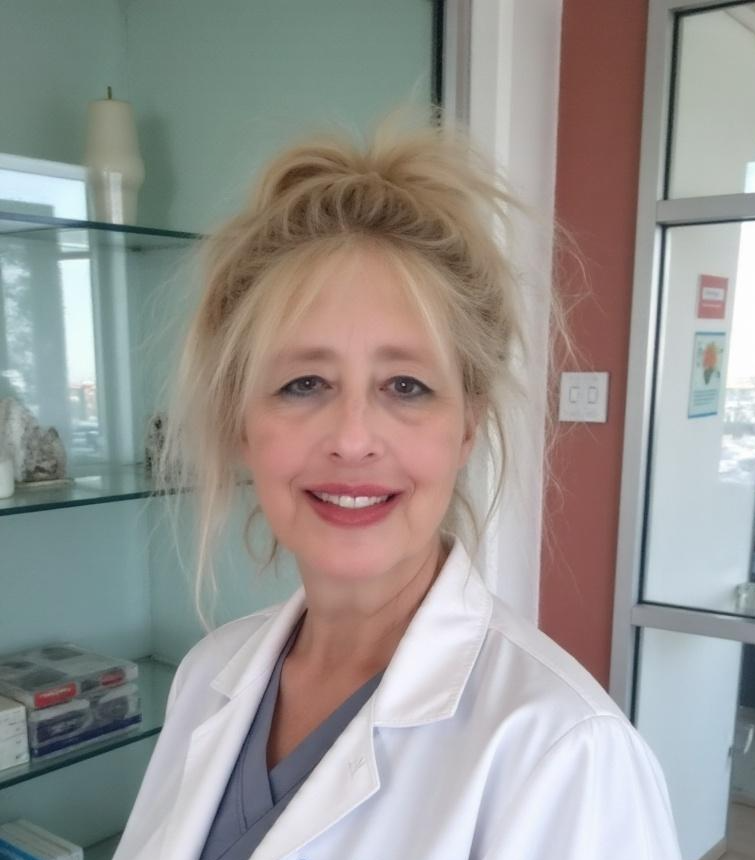
Nancy L. Kimmel obtained her PhD in Environmental Engineering in 2002, then went on to teach Physics and Mechanical Engineering at Lawrence Technological University, Henry Ford College and Oakland University. She obtained her Associate in Nursing from Henry Ford College and then went on to earn her Master Degree as a Family Nurse Practitioner and became Board Certified working as a licensed FNP in the State of Michigan. She then went on to Medical School where she is now in her 3rd year, and is also in the process of obtaining her Doctorate in Nursing Practice through Chamberlin University. She has authored the NET Study Guide, as well a several books on subjects of Math, ECG/EKG and Phlebotomy. She holds a patent on an Air Filter through the U.S. Patent Office.
313-826-2381