
Dealing with Medical Misinformation: How Healthcare Workers Can Educate Patients
These days, everyone has a voice and opinion. Everyone is eager to tell what they read in an article a few years ago or what they have already experienced. It is always nice to share information, but it can become disorderly when it harms the patient. It becomes visible as an endeavor. It is here that the false news about medicine comes into play.
It is not surprising that a patient will be convinced after watching a YouTube or Facebook video when they first visit. In this case, they also respond negatively to medical practitioners by interrogating them, jeopardizing their health.
This will have to be thought out and discussed before it can be fixed.
How to Understand How False Information Spreads
Social media is simple to blame. But that’s not the only cause. People want quick answers. They look for fast cures. Most of them mean well.
Nevertheless, they tend to rely on unreliable sources. A catchy post may sound true. Soon, it spreads everywhere.
This is the reason why patient education is essential. People do not think by knowing the source of facts. They start asking questions. They make better choices. That’s how real change begins.
The Art of Building Credibility in Teaching
Before speaking with the patient, you need to earn their trust. This is about listening to them rather than correcting them immediately. Questions such as “Where did you read that?” should be asked as they help in creating confidence and trust. Listening to the patient will motivate the patient to be more involved in the subsequent steps.
But when you set to work making them up on the spot, a wall starts to grow.
Instead, demonstrate that you appreciate their issues. Listening and hearing are always mutually related. Eye contact and calm intonation allow you to have a substantial conversation. More to the point, it is more important to show them the other side than to prove them wrong.
Making Health Information Simple
Educating patients is definitely not about giving them a ton of facts that they might never understand. It means explaining in such a way that the patient really understands. Medical terms can scare even the most intelligent person. Try to explain it by using things they are already familiar with. When a patient is convinced of a “miracle cure,” you can explain what really happens in the body and why the manufacturer of the product is lying.
For instance, when someone comes across an article that says lemon water makes the liver “detox” and you know it is not true, you could explain it this way: “The liver is naturally the one that detoxifies your body, and it does so all the time. Imagine it as a device that never stops working. Lemon water is not harmful at all, but it is not the one that cleans your liver; it is your liver that does that work.”
Talking in simple, everyday terms makes them feel comfortable and helps them figure things out themselves.
Providing People with Trustworthy Sources
There are times when patients are not aware of where to find out the real facts. They view a single glitzy post with strict guarantees and no evidence to back them up. Medical staff members can contribute to that by providing reliable web links and easy-to-read resources. Write a list and distribute it. Name such websites as CDC, Mayo Clinic, or WebMD.
It is not to lecture them but to provide them with more effective tools. When you demonstrate to them where to find trusted information, this gradually instills in them the confidence to question what they see on the internet. With time, patients begin to verify facts before being fooled by the following viral statement.
Addressing False Claims
There is particular medical misinformation that needs to be tackled directly. It is impossible to remain quiet when a patient thinks that something bad is going to happen. It is the trick of doing it without confrontation. Begin with, “I understand why that sounds persuasive,” then quietly go into explaining why that is not true.
Provide evidence of reliable research or organizations. Make them understand what will go wrong should one adhere to such misleading guidance. As soon as individuals realize the actual outcomes, they tend to contemplate.
Using Stories to Teach
Stories are memorable, and facts are essential. In most instances, medical professionals rely on actual patient cases to argue their point. You may tell a tale about a person who paid for bad advice on the internet and got ill. The strength of these stories lies in their emotional relatability.
Visuals can help too. Demonstrate what happens inside the body by drawing something simple on paper. Use comparisons. To describe the mechanism of action of antibiotics, you might say, “It is like using the right tool for the correct screw. When you make a mistake with the one you are using, you leave nothing in place and may peel the screw.”
These mini-teaching experiences simplify complex concepts for memorization.
Keeping Up with New Myths
The internet is open twenty-four hours a day, and there is a new health trend every week. Keeping afloat is no longer an option for healthcare workers. It may help to follow the official page, subscribe to medical newsletters, and join professional forums. Knowing what is trending will help you be ready with answers before patients even make requests.
That said, it is always a good idea to discuss false information with colleagues. Exchanging notes may help you save time and offer new ways to explain the patient’s condition.
Time and Patience Matter
Most medical appointments are brief. It is then challenging to discuss a significant subject such as misinformation within a single visit. Others utilize handouts or brief follow-ups via the patient portals. You may make it simple, one myth at a time. Even a short talk may do.
Patients will always hold some beliefs. It takes time and compassion to change that. Other healthcare workers are successful with motivational interviewing, open questions, and directing the patient to find the truth instead of telling it to them.
The Role of Hospitals and Clinics
Personal action is good, but the healthcare organizations must do it as well. They will be able to provide their teams with brief patient education and communication workshops. Hospitals can develop short video clips or leaflets that bust myths.
It is also useful when the clinics post truthful information on social media. The more good information one notices in their feeds, the less space there is for false claims. Collaboration with community agencies, schools, and libraries can also help reach more individuals who might not regularly visit clinics.
Wrapping It Up
It is not about a medical misinformation argument. It’s about building awareness and assisting individuals to take better care of themselves. It requires patience, trust, and straightforwardness. All the truth-telling breaks up the misunderstanding.
Healthcare professionals are well-positioned to guide individuals through the cacophony of information. They can transform misinformation into education by teaching patients to think critically, where to source reliable information, and how to maintain a kind, clear conversation.
Patient education is not a test or a set of instructions to be followed. It means providing individuals with the ability to doubt, educate, and make wise health decisions. Once such an occurrence happens, everybody benefits: the patients, the professionals, and the entire healthcare community.
References
1. Roberts, B., et al. (2023). Social Media, Misinformation, and Online Patient Education in Emergency General Surgical Procedures. Journal of Surgical Research, 287, 16-26.
2. Gaysynsky, A., Senft Everson, N., Heley, K., & Chou, W.Y. (2024). Perceptions of Health Misinformation on Social Media: Cross-Sectional Survey Study. JMIR Infodemiology, 4, e51127.
3. Asan, O., Yu, Z., & Crotty, B.H. (2021). How clinician-patient communication affects trust in health information sources: Temporal trends from a national cross-sectional survey. PLOS ONE, 16(2), e0247583.
4. Lei, L.Y.C., Chew, K.S., Chai, C.S., & Chen, Y.Y. (2024). Evidence for motivational interviewing in educational settings among medical schools: A scoping review. BMC Medical Education, 24(1), 856.
5. Temedda, M.N., et al. (2024). Motivational interviewing to support medication adherence in older patients: Barriers and facilitators for implementing in hospital setting according to healthcare professionals. Patient Education and Counseling, 124, 108253.
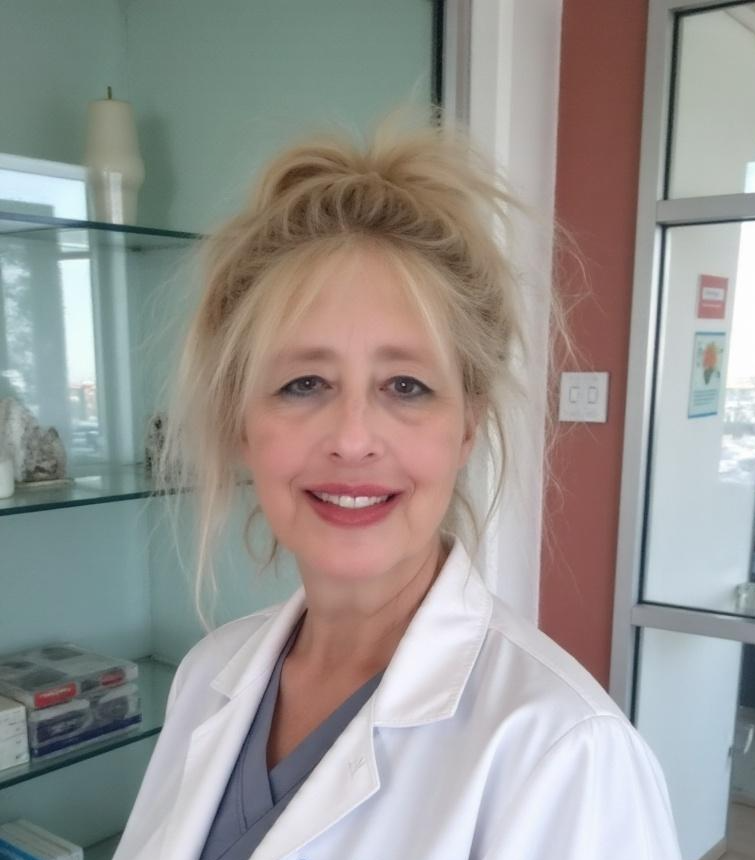
Nancy L. Kimmel obtained her PhD in Environmental Engineering in 2002, then went on to teach Physics and Mechanical Engineering at Lawrence Technological University, Henry Ford College and Oakland University. She obtained her Associate in Nursing from Henry Ford College and then went on to earn her Master Degree as a Family Nurse Practitioner and became Board Certified working as a licensed FNP in the State of Michigan. She then went on to Medical School where she is now in her 3rd year, and is also in the process of obtaining her Doctorate in Nursing Practice through Chamberlin University. She has authored the NET Study Guide, as well a several books on subjects of Math, ECG/EKG and Phlebotomy. She holds a patent on an Air Filter through the U.S. Patent Office.
313-826-2381