
Do You Need a License to Be a Phlebotomist?
One of the most confusing aspects of starting a career in phlebotomy is understanding the legal requirements. If you search online, you will see the words “license” and “certification” thrown around constantly, often used interchangeably. But in the medical field, those two words mean very different things.
So, do you actually need a license to be a phlebotomist? The answer is: It depends entirely on where you live.
Let’s clear up the confusion between licensing and certification, and look at exactly what you need to start working.
License vs. Certification: What is the Difference?
To understand the rules, you first have to understand the vocabulary:
- A License is issued by a state government. It is a legal requirement. If a state requires a license, it is illegal to draw blood without one.
- A Certification is issued by a national, private credentialing agency (like the NHA, ASCP, or AMCA). It proves you have met a professional standard of competence, but it is not a government document.
The Four States That Require a License
As of 2026, there are only four states in the U.S. that legally require phlebotomists to hold a state-issued license or certificate to practice:
- California: The strictest state in the country. You must obtain a Certified Phlebotomy Technician I (CPT I) certificate from the California Department of Public Health. You can read the full breakdown in our guide to California Phlebotomy Certification.
- Washington: Requires a Medical Assistant-Phlebotomist (MA-P) credential issued by the state Department of Health.
- Nevada: Requires certification as an Office Laboratory Assistant or a specific phlebotomy credential through the state.
- Louisiana: Requires a state license issued by the Louisiana State Board of Medical Examiners.
If you plan to work in any of these four states, you must complete an approved training program, pass a national exam, and then apply to the state government for your official license before you can touch a patient.
What About the Other 46 States?
If you live in New York, Texas, Florida, Illinois, or any of the other 46 states, there is no state law requiring you to have a license to draw blood.
Legally speaking, in those states, a doctor or clinic manager could hire someone off the street and teach them to draw blood on the job. However, just because it is legal does not mean it actually happens.
The Employer Requirement: Why You Need Certification Anyway
This is where the reality of the job market kicks in. While 46 states do not legally require a license, almost 100% of employers require national certification.
Hospitals, diagnostic labs (like Quest Diagnostics and LabCorp), and large medical networks have strict liability and insurance policies. They will not hire uncertified phlebotomists because doing so increases their risk of malpractice lawsuits. They need proof that you know how to handle biohazards, identify veins safely, and manage patient care.
So, while you may not need a state license in Ohio or Michigan, you absolutely need a national certification to get hired.
How to Get Certified
Whether you need a state license or just an employer-mandated certification, the path to getting there is exactly the same:
- Complete a Training Program: You must graduate from an accredited phlebotomy program that includes both classroom theory and hands-on clinical practice. If you are wondering how long this takes, read our guide on How to Become a Phlebotomist.
- Pass a National Exam: You must pass a certification exam from a recognized agency like the NHA, AMCA, or NCCT.
- Apply to the State (If Applicable): If you live in one of the four regulated states, you submit your national certification to the state board to get your license.
Get Started on the Right Path
Do not let the confusion over licensing hold you back. The most important step you can take is enrolling in a high-quality training program that prepares you for national certification—because that credential will open doors for you in all 50 states.
At Phlebotomy Career Training, our programs are designed to meet the rigorous standards required by national certification agencies and employers across the country.
Enroll in our Online Phlebotomy Certification Program today and take the first step toward a secure career in healthcare.
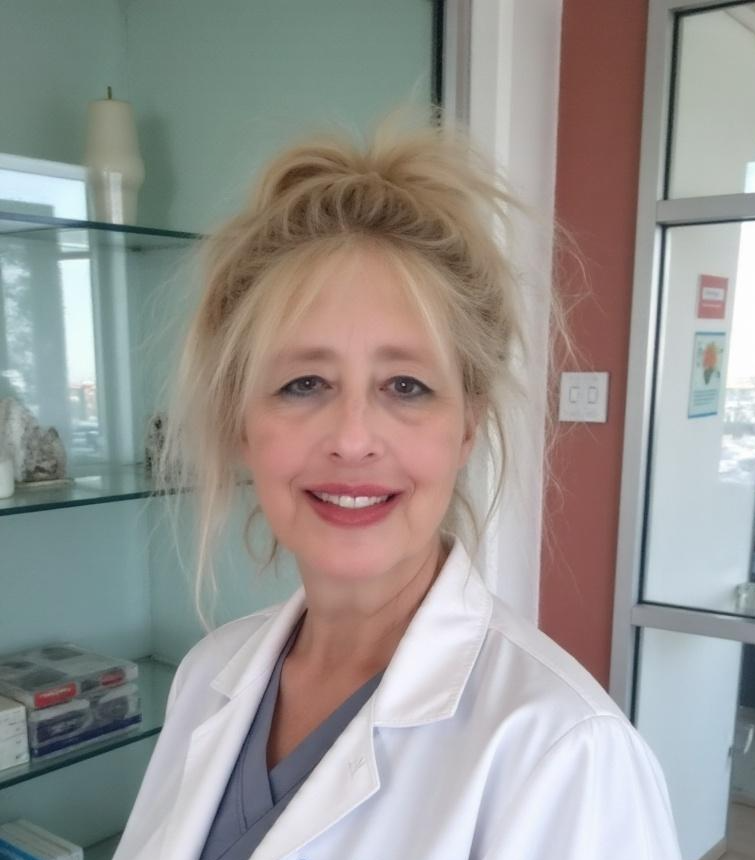
Nancy L. Kimmel obtained her PhD in Environmental Engineering in 2002, then went on to teach Physics and Mechanical Engineering at Lawrence Technological University, Henry Ford College and Oakland University. She obtained her Associate in Nursing from Henry Ford College and then went on to earn her Master Degree as a Family Nurse Practitioner and became Board Certified working as a licensed FNP in the State of Michigan. She then went on to Medical School where she is now in her 3rd year, and is also in the process of obtaining her Doctorate in Nursing Practice through Chamberlin University. She has authored the NET Study Guide, as well a several books on subjects of Math, ECG/EKG and Phlebotomy. She holds a patent on an Air Filter through the U.S. Patent Office.
313-826-2381