
Which Phlebotomy Certification is Best? NHA vs. ASCP vs. NCCT
You have decided to become a phlebotomist, you have completed your training, and now you are facing the final hurdle: the national certification exam. But when you look at the options, it can be confusing. There is no single “official” phlebotomy certification in the United States. Instead, there are several different national credentialing agencies.
So, which phlebotomy certification is best? The truth is, the “best” certification depends entirely on your career goals, where you want to work, and what your training program qualifies you for.
Let’s break down the major credentialing agencies so you can make the right choice for your career.
Why Do You Need Certification at All?
Before we compare the agencies, let’s address a common question: Do you actually need to be certified? In most states, the legal answer is no. Only four states (California, Washington, Nevada, and Louisiana) legally require a state license to draw blood.
However, the practical answer is yes. Even if your state does not require it, almost all major employers—hospitals, diagnostic labs like Quest or LabCorp, and large clinics—will not hire you without a national certification. It is the industry standard that proves you have the knowledge and skills to perform the job safely.
The Top Phlebotomy Certification Agencies
While there are many agencies, a few stand out as the most widely recognized and respected by employers nationwide.
1. National Healthcareer Association (NHA)
Credential: Certified Phlebotomy Technician (CPT)
The NHA is one of the most popular and widely accepted certification agencies in the country. Their CPT credential is highly respected by hospitals and private labs alike.
- Requirements: You must have a high school diploma, complete a phlebotomy training program, and perform a minimum of 30 successful venipunctures and 10 capillary sticks.
- Best For: Most entry-level phlebotomists. The NHA is incredibly common, their study materials are excellent, and the credential will get you hired almost anywhere.
2. American Society for Clinical Pathology (ASCP)
Credential: Phlebotomy Technician (PBT)
The ASCP is often considered the “gold standard” in laboratory medicine. Their exams are known for being rigorous and highly clinical.
- Requirements: The ASCP has several eligibility routes, but the most common requires completing an approved training program and performing 100 successful, unaided blood collections.
- Best For: Phlebotomists who want to work in high-level hospital laboratories or those who plan to advance into other clinical pathology roles. Because of the 100-draw requirement, it is harder to qualify for than the NHA.
3. National Center for Competency Testing (NCCT)
Credential: National Certified Phlebotomy Technician (NCPT)
The NCCT is another highly reputable agency that is widely accepted across the United States.
- Requirements: You must complete an approved program and submit a critical skill competency form documenting your clinical experience.
- Best For: Students whose training programs are specifically aligned with NCCT standards. It is a solid, widely recognized alternative to the NHA.
4. American Medical Certification Association (AMCA)
Credential: Phlebotomy Technician Certification (PTC)
The AMCA is a growing agency that is gaining strong recognition, particularly because their exams often include a strong focus on clinical safety and patient care.
- Requirements: Completion of an approved training program and a high school diploma.
- Best For: Students looking for a modern, well-supported certification process. Many top-tier training programs now partner with the AMCA.
How to Choose the Right One
If you are struggling to decide, here is the secret: You do not have to guess. Your training program will usually guide you.
High-quality phlebotomy schools design their curriculum to meet the specific requirements of one or more of these national agencies. When you enroll, the school will tell you which exams their program prepares you for.
For example, if you want to work in California, you must ensure your chosen agency is approved by the California Department of Public Health (CDPH). You can read more about those specific rules in our guide to California Phlebotomy Certification.
Get the Right Training First
No matter which certification you ultimately choose, the first step is getting the right education. You cannot sit for any of these exams without completing a structured training program that includes both classroom theory and hands-on clinical practice.
At Phlebotomy Career Training, our programs are designed to prepare you for success on the national exams recognized by top employers nationwide.
Enroll in our Online Phlebotomy Certification Program today and take the first step toward earning your national credential.
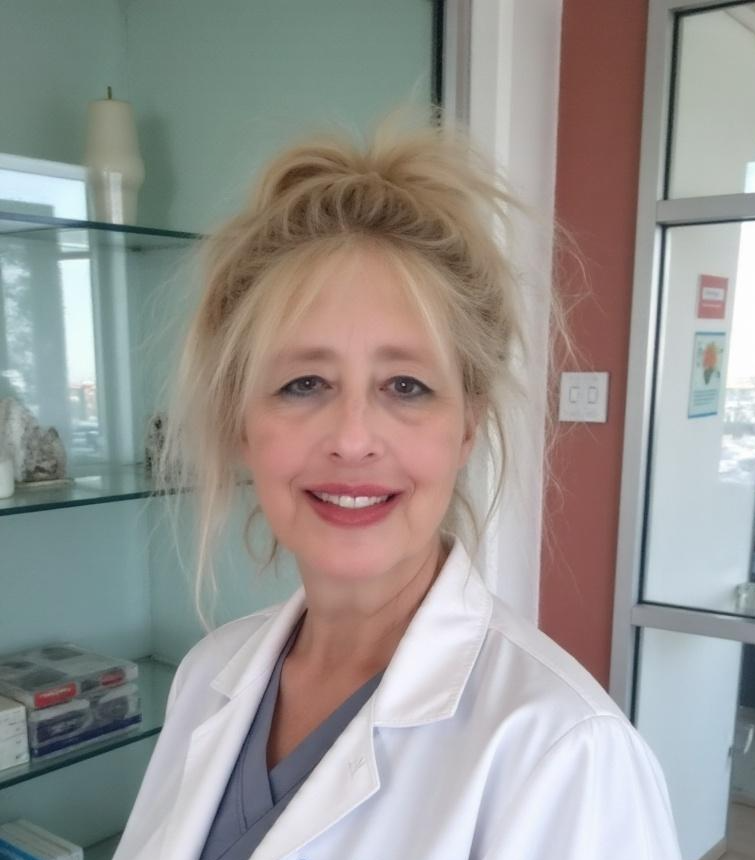
Nancy L. Kimmel obtained her PhD in Environmental Engineering in 2002, then went on to teach Physics and Mechanical Engineering at Lawrence Technological University, Henry Ford College and Oakland University. She obtained her Associate in Nursing from Henry Ford College and then went on to earn her Master Degree as a Family Nurse Practitioner and became Board Certified working as a licensed FNP in the State of Michigan. She then went on to Medical School where she is now in her 3rd year, and is also in the process of obtaining her Doctorate in Nursing Practice through Chamberlin University. She has authored the NET Study Guide, as well a several books on subjects of Math, ECG/EKG and Phlebotomy. She holds a patent on an Air Filter through the U.S. Patent Office.
313-826-2381