
Let me ask you a question. Does looking at bacterial colonies under a microscope and watching how many have grown over the past 24 to 72 hours fascinate you? Do you like having your finger on the pulse of how diagnoses are actually made — knowing that a physician can identify and treat an infection because someone in a lab correctly identified the bacteria or virus growing in a Petri dish?
If so, then you would probably love being a Medical Laboratory Technician.
First, an important distinction: the Medical Laboratory Technician is not the same as a Medical Laboratory Technologist, which is a four-year degree program. As an MLT, you work right alongside the Technologist as a highly skilled and essential member of the lab team.
The Medical Laboratory Technician prepares slides, counts colonies, works with serum chemistry, and contributes across multiple departments — including hematology, pathology, cytology, and histology. You may process tissue specimens that have been excised in the operating room. You might see diseased gallbladders, gallstones preserved in jars, and tissue samples being analyzed for disease. Every day brings something different.
“If you like multitasking and having real variety in your day-to-day work, the Medical Laboratory Technician role is one of the most interesting jobs in all of healthcare.”
The role of the Medical Laboratory Technician is wonderfully varied. Here is a snapshot of what your work will look like:
Core Responsibilities of the MLT
- Preparing microscope slides and counting bacterial colonies
- Working with serum chemistry and hematology specimens
- Assisting with pathology and cytology — processing surgical specimens
- Histology work with tissue samples
- Blood type and cross-match procedures for transfusion preparation
- Blood culture preparation and incubation in microbiology
- Maintaining lab cleanliness and proper chemical storage
- Handling hazardous materials including hydrochloric acid, staining solutions, and formaldehyde
- Drawing blood when required — making phlebotomy experience essential
In the laboratory, precision is not optional — it is everything. Consider blood cultures: the phlebotomist draws the sample and delivers it to microbiology, where the laboratory technician prepares the cultures on Petri dishes and incubates them for 48 to 72 hours. After incubation, the technician determines whether the bacteria that has grown is aerobic or anaerobic. That single piece of information helps the physician identify the pathogen, understand its virulence, and prescribe the right medication.
If any step is missed — if the sample is collected improperly, handled incorrectly, or processed without care — the patient is left without an accurate diagnosis. Their condition can deteriorate significantly while the care team works without reliable data. From collection to analysis, every link in that chain must hold.
“Every step of the way is crucial. The lab does not just support patient care — it drives it.”
One of the most critical functions of the Medical Laboratory Technician is assisting with blood type and cross-match procedures. When a patient requires a transfusion, the lab technician helps determine the correct blood product and observes what happens when different blood types are mixed — whether the blood coagulates, separates, or reacts. Getting this right is not just a technical task. It is a life-saving one.
This course requires phlebotomy as a prerequisite — and that requirement is intentional. Many Medical Laboratory Technicians are also required to draw blood, and a student who already understands specimen collection, chain of custody, and pre-analytical variables is a far more capable lab technician from day one.
Students must have phlebotomy certification or documented phlebotomy experience before enrolling. A formal certificate of completion is not strictly required — proof of blood draw experience is sufficient. Students with a science background looking to advance their career are also an excellent fit for this program.
The Medical Laboratory Technician certification is a natural stepping stone for phlebotomists who are ready to advance. It is also an ideal entry point for anyone with a science background who wants real hands-on experience in a clinical laboratory environment.
If you find that you love the work — which many students do — you can always continue your education and pursue a full degree as a Medical Laboratory Technologist. Jobs in this field are plentiful, the certification is widely recognized across the United States, and the demand for qualified laboratory professionals continues to grow.
Clock Hours
Online Study
Months to
Complete
Self-Paced
Online
National Exam
Included
The Medical Laboratory Technician program is 280 clock hours of online study, completed entirely at your own pace. Students have up to six months to complete the program in its entirety. The national certification exam is included in your tuition — because we are confident in our students, and we know that your certification opens doors.
Behind Every Diagnosis: The Indispensable Role of the Medical Laboratory Technician
Every time a doctor orders bloodwork, every time a nurse sends a urine sample to the lab, every time a patient waits anxiously for results that will determine their course of treatment — there is a clinical laboratory professional on the other end of that process. They’re the ones performing the analyses, processing the specimens, and ensuring the integrity of the data that drives medical decisions.
Medical Laboratory Technicians, or MLTs, don’t often get the spotlight. But their work underpins virtually everything that happens in modern medicine. It’s estimated that laboratory test results influence the majority of clinical decisions — which makes the professionals behind those results some of the most consequential people in healthcare.
What MLTs Actually Do — And Why It’s More Complex Than It Looks
The day-to-day work of a medical laboratory technician covers a range of specimen types and testing modalities. Blood is the most common. After a phlebotomist draws a sample, it’s the MLT’s job to process it — centrifuging the tubes to separate serum and plasma, labeling everything according to strict chain-of-custody protocols, and running the analyses that will produce the data clinicians depend on.
But blood is only part of it. Urine specimens require different handling and different testing protocols. A standard urinalysis involves dipstick testing followed by microscopic analysis — a technically precise process that can reveal signs of infection, kidney disease, diabetes, and more. Fecal specimens are tested for occult blood, parasites, and bacterial cultures. Each specimen type has its own procedures, its own equipment, and its own potential for error if not handled correctly.
And then there’s the world of specialized testing. Rapid strep tests, influenza panels, pregnancy tests, glucometer quality control, blood smears — these are the kinds of point-of-care and specialized tests that have become standard in clinical settings. An MLT who is proficient across this full range of testing is genuinely valuable.
“Laboratory test results influence the majority of clinical decisions — making MLTs some of the most consequential people in healthcare.”
The Technical Backbone: Centrifugation and Laboratory Safety
If there’s one piece of equipment that defines a clinical laboratory, it’s the centrifuge. The process of spinning blood and urine specimens at precise speeds to separate their components is fundamental to laboratory science — and there’s more to it than flipping a switch. Proper centrifugation requires understanding balance requirements, speed calibration, time protocols, and post-centrifugation handling. Errors in this process can compromise specimen integrity and lead to inaccurate test results.
Equally important is laboratory safety. Clinical labs handle biological specimens every day — specimens that carry genuine infection risk. Universal standard precautions are non-negotiable. MLTs must understand chemical hazard protocols, biohazardous waste disposal procedures, and the proper use of personal protective equipment. This isn’t just regulatory compliance; it’s the difference between a safe workplace and a dangerous one.
Why Phlebotomy Experience Is the Right Starting Point
PCT Institute’s Medical Laboratory Technician program requires prior phlebotomy experience as a prerequisite — and that requirement is deliberate. Phlebotomists already understand specimen collection, chain of custody, patient interaction, and the basic mechanics of blood handling. They know what a properly collected sample looks like. They understand the consequences of pre-analytical errors — the kind of mistakes that happen before the sample ever reaches the lab.
That foundation makes for a better, safer, more confident MLT. Instead of spending time on the basics, students in this program can move directly into the lab science — building on what they already know rather than starting from scratch.
This also reflects something important about career pathways in healthcare. Phlebotomy is a fantastic entry point into the field. But for professionals who want to go deeper, who are curious about what happens to the samples they collect, and who want greater clinical responsibility and earning potential — laboratory technician training is the logical next step.
The Career Landscape for MLTs
Clinical laboratories exist in a wide range of healthcare settings: hospitals, outpatient clinics, reference laboratories, physician offices, urgent care facilities, and public health agencies, among others. The variety of work environments means that MLTs have real flexibility in where they build their careers.
Salary potential is meaningful, too. MLTs with strong technical skills and experience in specialized testing are in demand — and compensation reflects that. For phlebotomists who have been wondering what comes next, MLT certification is a credential that can translate directly into a higher-paying, more clinically engaged career.
PCT Institute’s MLT Program: What to Expect
The Medical Laboratory Technician program at PCT Institute of Health Care is a 280-clock-hour program designed for working healthcare professionals. Because students come in with phlebotomy experience, there’s no clinical externship requirement — the prerequisite experience already covers that ground. The curriculum is structured around the six core competency areas that define clinical laboratory practice:
- Blood Specimen Collection and Processing — including centrifugation, serum and plasma separation, specimen labeling, and chain of custody documentation.
- Urine Specimen Processing — urinalysis by dipstick and microscopic analysis, culture preparation, and proper specimen handling.
- Fecal Specimen Processing — occult blood testing, ova and parasite preparation, and culture specimen handling.
- Centrifugation — vacutainer tube processing, speed settings, balance protocols, and post-centrifugation handling.
- Specialized Testing — smears, rapid strep, influenza panels, pregnancy testing, and glucometer quality control.
- Universal Standard Precautions — laboratory safety, chemical hazard awareness, and biohazardous waste disposal.
The program is self-paced and accessible through the PCT Institute online portal, giving students the flexibility to complete training around existing work schedules. And like all PCT Institute certification programs, the national exam is included — scheduled before the final month of your enrollment period so you have time to prepare and take it within your course window.
The Next Step in a Healthcare Career Worth Building
If you’re a certified phlebotomist wondering what’s next — or an experienced healthcare professional looking to formalize your laboratory skills — the MLT program at PCT Institute of Health Care may be exactly what you’ve been looking for. The program launches soon at PCTinstituteofhealthcare.org. Seats are limited, and the professionals who move first will be the ones who get there first.
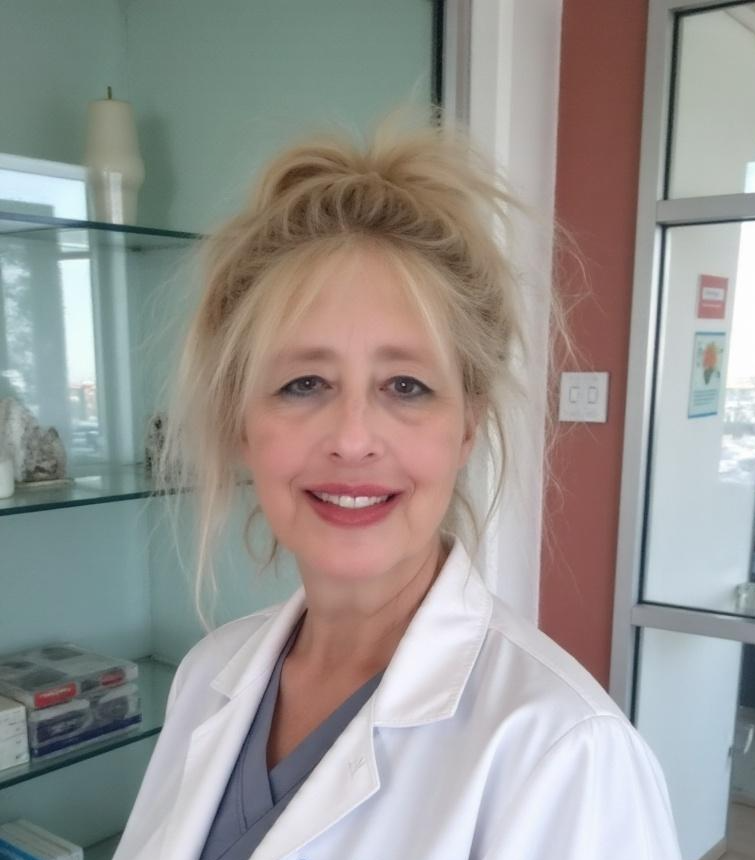
Nancy L. Kimmel obtained her PhD in Environmental Engineering in 2002, then went on to teach Physics and Mechanical Engineering at Lawrence Technological University, Henry Ford College and Oakland University. She obtained her Associate in Nursing from Henry Ford College and then went on to earn her Master Degree as a Family Nurse Practitioner and became Board Certified working as a licensed FNP in the State of Michigan. She then went on to Medical School where she is now in her 3rd year, and is also in the process of obtaining her Doctorate in Nursing Practice through Chamberlin University. She has authored the NET Study Guide, as well a several books on subjects of Math, ECG/EKG and Phlebotomy. She holds a patent on an Air Filter through the U.S. Patent Office.
313-826-2381