

Phlebotomist Employment and Salary: A Workforce and Compensation Analysis
Abstract
Phlebotomy occupies a foundational position within the clinical laboratory continuum, supplying the pre-analytical specimens upon which an estimated majority of medical decisions depend. This article examines the current employment landscape and compensation structure for phlebotomists in the United States, drawing primarily on federal labor data alongside supplementary private wage aggregators. It addresses national wage benchmarks, the distribution of earnings across percentiles, geographic and industry-based variation, the measurable effect of certification and experience, and the projected trajectory of the occupation through 2034. The analysis is intended to inform prospective entrants, educators, and workforce planners who require a grounded, citable picture of the field rather than promotional generalities.
1. Introduction
A phlebotomist is a healthcare professional trained to collect blood specimens through venipuncture, capillary puncture, and, where scope permits, arterial collection, for the purposes of laboratory analysis, transfusion, donation, and research. Although the role is sometimes characterized as a single technical skill, it sits at the entry point of the diagnostic pipeline. The accuracy of nearly every downstream laboratory result depends on the quality of specimen collection, labeling, and handling performed at the bedside or in the draw chair.
The occupation is notable for its accessibility. Entry typically requires a postsecondary nondegree certificate completed in less than one year, and in some settings a high school diploma paired with on-the-job training is sufficient. This low barrier to entry, combined with steady demand, makes phlebotomy a common point of first entry into the allied health workforce and a frequent springboard toward medical assisting, nursing, and laboratory science. The sections that follow quantify what that workforce looks like and what it earns.
2. National Employment Picture
According to the U.S. Bureau of Labor Statistics (BLS), phlebotomists held approximately 139,700 jobs as of 2024. Employment is distributed across a defined set of settings, with hospitals and medical and diagnostic laboratories accounting for the largest shares, followed by physicians’ offices, outpatient care centers, and blood donor and ambulatory facilities. Roughly one third of all phlebotomy positions are situated in state, local, and private hospitals, which together form the single largest employer category.
This concentration matters for anyone planning a career path. Hospital employment tends to carry structured shift work, including nights, weekends, and holidays, but also brings shift differentials, benefits, and clearer internal advancement ladders. Laboratory and outpatient settings, by contrast, more often offer predictable daytime hours, a trade-off that many practitioners value even where base pay is modestly lower.
3. National Wage Benchmarks
The most authoritative compensation figure comes from the BLS Occupational Outlook Handbook, which reports a median annual wage of $43,660 for phlebotomists as of May 2024. This translates to roughly $20.99 per hour for full-time work. The median is the midpoint of the distribution: half of all phlebotomists earn more than this figure and half earn less.
The full distribution is wider than the median alone suggests. The bottom ten percent of earners take home approximately $34,860 annually, while the top ten percent earn approximately $57,750. Entry-level practitioners therefore commonly begin in the mid-thirty-thousands, with experienced and well-credentialed phlebotomists in favorable markets reaching the upper fifty-thousands and beyond.
It is worth noting a divergence in the published figures. Federal OEWS tabulations and private aggregators such as Payscale, ZipRecruiter, and Vivian frequently report lower averages, often in the range of $37,000 to $42,000, because they draw on different samples, weighting methods, and self-reported data. Where this article cites a national benchmark, it relies on the BLS Occupational Outlook Handbook figure of $43,660 as the most consistent and widely referenced standard, while acknowledging that real local pay can sit on either side of it.
4. Geographic Variation
Location is among the strongest determinants of phlebotomist pay, and the spread between the highest and lowest paying states approaches twenty thousand dollars per year. California consistently leads, with state mean wages reported above $52,000 and metropolitan concentrations climbing higher still. Other high-paying states cluster in the Northeast and Pacific Northwest, including Washington, New York, Massachusetts, Maryland, and Delaware, several of which post median wages comfortably above the national figure.
Metropolitan premiums are pronounced. Within California, the San Jose, San Francisco, and Santa Cruz metro areas rank among the highest-paying in the nation, reflecting both healthcare system density and elevated living costs. At the opposite end, states in the Deep South and parts of Appalachia, including Mississippi, West Virginia, and Alabama, report the lowest medians, with figures in the low-to-mid thirty-thousands.
A crucial caveat accompanies these rankings: nominal wages overstate the advantage of high-cost states. When adjusted for regional price parity, a salary that looks generous in a coastal metro may carry less purchasing power than a smaller nominal figure in a low-cost interior state. Prospective phlebotomists weighing relocation should evaluate cost-adjusted pay rather than headline numbers alone.
5. Industry and Setting Effects
Wages also track the employment setting. BLS data indicate that outpatient care centers and medical and diagnostic laboratories tend to offer higher median pay than physicians’ offices, where the mean annual wage sits closer to the low forty-thousands. Independent reference laboratories such as the large national diagnostic chains pair competitive base pay with volume-based incentives in high-throughput roles.
Hospital phlebotomists frequently benefit from features absent in smaller settings: health insurance, retirement plans with employer matching, paid time off, continuing education allowances, and shift differentials that can add a meaningful premium per hour for evening, night, and weekend coverage. These non-wage components can shift total compensation materially and should be factored into any comparison of nominal hourly rates across settings.
6. Certification and Experience as Wage Drivers
Two controllable factors reliably raise phlebotomist earnings: credentialing and accumulated experience.
Certification, although not universally mandated, is increasingly expected by employers and is required for practice in a small number of states that maintain formal licensure. Certified phlebotomists holding recognized credentials, such as the Certified Phlebotomy Technician designation or the Phlebotomy Technician credential from a national certifying body, commonly earn in the range of five to fifteen percent more than uncertified counterparts. Certification also functions as a hiring filter: many hospitals now require at least one recognized credential at the point of hire, meaning the credential affects not only wage level but access to the higher-paying settings in the first place.
Experience compounds these gains. Entry-level practitioners with less than one year of service occupy the lower end of the hourly range, while those with substantial tenure move up through the percentiles and become eligible for lead, trainer, and supervisory roles. Advancement into phlebotomy supervision, or lateral movement into related allied health roles, represents the most common route to materially higher earnings within or adjacent to the field.
7. Employment Outlook
The occupational outlook is favorable. The BLS projects employment of phlebotomists to grow approximately 6 percent from 2024 to 2034, a rate faster than the average across all occupations. This projection corresponds to roughly 18,400 openings per year on average over the decade. Importantly, the majority of these openings are expected to arise not from net new positions alone but from the need to replace workers who transfer into other occupations or leave the labor force, including through retirement.
Two demographic and structural forces underpin this demand. First, the aging of the population sustains and expands the volume of laboratory testing, since older adults require more frequent diagnostic monitoring. Second, the continued expansion of outpatient and reference laboratory capacity distributes demand across a growing number of collection sites. Because phlebotomy services cannot be readily automated away at the point of patient contact, the role retains a degree of structural durability that many entry-level positions lack.
8. Discussion and Implications
For prospective entrants, the data describe a career with a distinctive profile: low entry cost, short time to credential, broad geographic availability, and stable rather than spectacular pay. The return on training investment is favorable precisely because the cost and duration of preparation are modest relative to the wages earned. Phlebotomy is therefore well suited both to those seeking a stable terminal role and to those using it as a deliberate first step toward further allied health education.
For educators and program directors, the figures reinforce the value proposition of certification-aligned curricula. Because credentialing demonstrably affects both wage level and employability, training programs that prepare students to pass recognized national examinations deliver measurable economic benefit to their graduates and a defensible outcomes record to their accreditors.
For workforce planners, the replacement-driven nature of projected openings is the salient point. Even modest percentage growth conceals a substantial annual hiring need, much of it concentrated in hospital systems that must continually backfill turnover. Pipeline development, rather than one-time expansion, is the appropriate strategic frame.
9. Conclusion
Phlebotomy is a small occupation by headcount but a load-bearing one within the clinical laboratory system. Its median wage of $43,660 as of May 2024, its faster-than-average projected growth, and its low barrier to entry combine to make it one of the more accessible and dependable footholds in allied health. Earnings vary meaningfully by geography, setting, certification status, and experience, and the practitioners who attend to those variables, by credentialing early, evaluating cost-adjusted pay, and positioning themselves in higher-paying settings, are best placed to maximize the return on a comparatively brief and inexpensive course of training.
Sources
- U.S. Bureau of Labor Statistics, Occupational Outlook Handbook, Phlebotomists. https://www.bls.gov/ooh/healthcare/phlebotomists.htm
- U.S. Bureau of Labor Statistics, Occupational Employment and Wage Statistics (OEWS), SOC 31-9097, Phlebotomists. https://www.bls.gov/oes/2023/may/oes319097.htm
- Coursera, Phlebotomist Salary Guide (2026). https://www.coursera.org/articles/phlebotomist-salary
- Nurse.org, Phlebotomist Salary by State (2026). https://nurse.org/healthcare/phlebotomy-salary/
- NurseJournal.org, The Best States To Be A Phlebotomist. https://nursejournal.org/healthcare/phlebotomist/best-states-for-phlebotomists/
Note: Federal wage figures reflect BLS May 2024 data as published in the Occupational Outlook Handbook. Private wage aggregators report varying averages owing to differences in sampling and methodology; readers should treat the BLS figure as the primary benchmark and local market data as the operative reality for any specific job search.
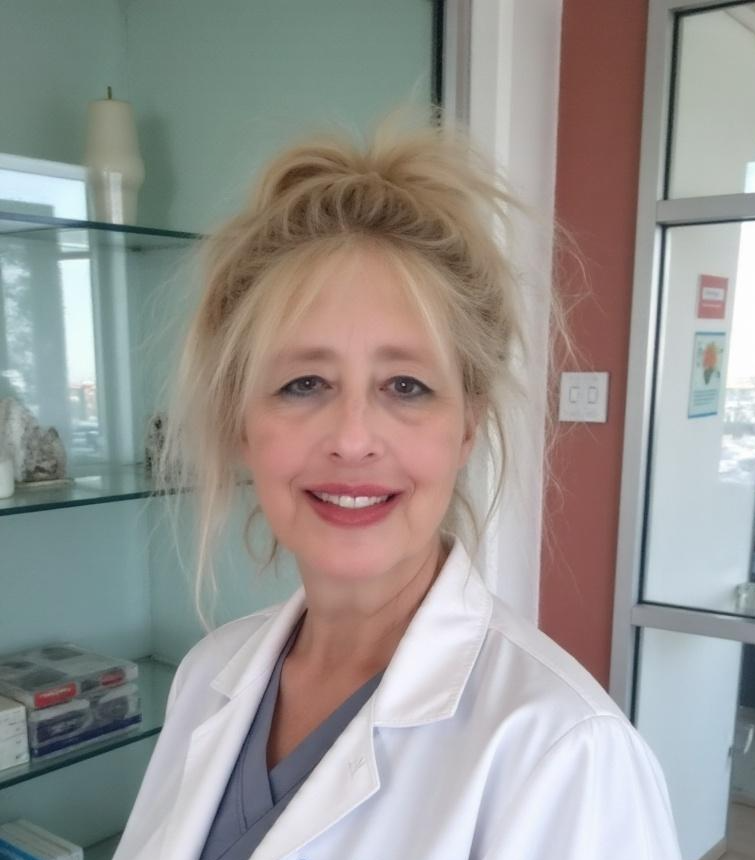
Nancy L. Kimmel obtained her PhD in Environmental Engineering in 2002, then went on to teach Physics and Mechanical Engineering at Lawrence Technological University, Henry Ford College and Oakland University. She obtained her Associate in Nursing from Henry Ford College and then went on to earn her Master Degree as a Family Nurse Practitioner and became Board Certified working as a licensed FNP in the State of Michigan. She then went on to Medical School where she is now in her 3rd year, and is also in the process of obtaining her Doctorate in Nursing Practice through Chamberlin University. She has authored the NET Study Guide, as well a several books on subjects of Math, ECG/EKG and Phlebotomy. She holds a patent on an Air Filter through the U.S. Patent Office.
313-826-2381