What It’s Actually Like to Train at PCT Institute
Let me walk you through it.
You pull into the lot on Michigan Avenue. You’ve driven past this building a hundred times, but today you’re walking through that blue door for real. You’re nervous. Maybe you’re coming straight from high school. Maybe you’re switching careers at thirty-five. Maybe you’ve been thinking about healthcare for years but never pulled the trigger.
Doesn’t matter. Everyone’s nervous on day one.
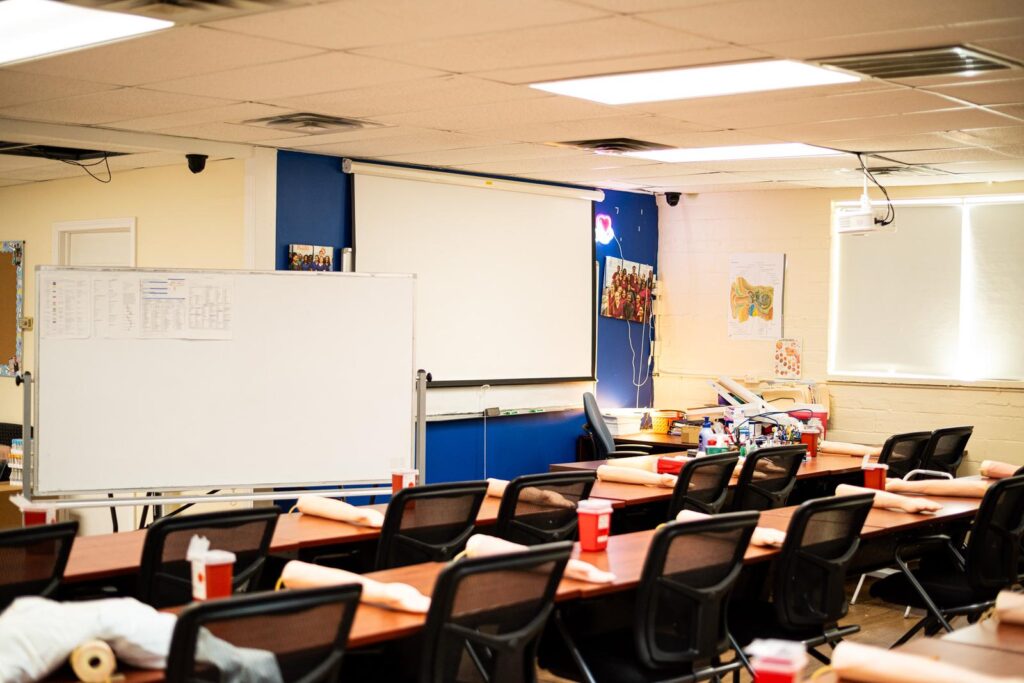
You sit down in one of our classrooms. There’s a whiteboard at the front, anatomical charts covering the walls, and a skeleton standing in the corner like it’s been waiting for you. Your instructor introduces themselves, tells you about the seventeen years they spent working in hospital labs before they started teaching, and then says something you weren’t expecting.
This is going to be hard. But you can do it.
And you believe them.
You start with theory. Anatomy and physiology if you’re in phlebotomy or medical assisting. Medical terminology if you’re in billing and coding. Pharmacology if you’re training as a pharmacy tech. It’s a lot. The Moodle platform keeps everything organized, but you’re still drinking from a fire hose.
You study at night. You take quizzes. You get some wrong. You study more. You start to see patterns. The circulatory system makes sense. The coding logic clicks. The drug classifications stop looking like alphabet soup.
And then one day, you realize you’re not guessing anymore. You actually know this stuff.
This is where it gets real.
You walk into the lab. There are training arms laid out on tables, veins running blue beneath the synthetic skin. There are centrifuges, sharps containers, butterfly needles, vacutainers, everything you’ll use in the field. Your instructor demonstrates proper technique. Then it’s your turn.
You miss the vein the first time. You’re shaking. You try again.
You get it.
The instructor nods. Good. Now do it fifty more times until you don’t have to think about it.
So you do. You practice venipuncture until you can find a vein by feel. You practice vital signs until you can take a blood pressure in your sleep. You practice sterile technique until it’s second nature. You work in exam rooms set up exactly like the ones you’ll see in a clinic, with real equipment, real protocols, real expectations.
No shortcuts. No “close enough.” You do it right, or you do it again.
Here’s something nobody tells you about healthcare training. You’re going to bond with the people in your cohort in ways you don’t expect.
You’ll study together at 11 PM before an exam. You’ll practice on each other’s arms until you’ve both been stuck a dozen times. You’ll celebrate when someone nails a difficult stick on the first try. You’ll commiserate when the material gets overwhelming. You’ll share job leads. You’ll text each other questions about coding modifiers or drug interactions or phlebotomy order of draw.
By the time you graduate, they’re not just classmates. They’re your people.
This is the moment that separates PCT Institute from everywhere else.
Before you sit for your national certification, you take our proprietary 200-question proctored exam. It’s comprehensive. It’s timed. It’s designed to be as challenging as the real thing, if not harder. Your instructor doesn’t sugarcoat it.
If you can pass this, you can pass anything.
You take the exam. You wait for the results. And when you see that you passed, you know you’re ready.
You walk across that same blue door you walked through on day one. But this time, you’re not nervous. You’re certified. You’re trained. You know your stuff.
You’ve got a resume that lists a nationally recognized certification. You’ve got skills you can demonstrate in an interview. You’ve got references from instructors who’ve seen you put in the work. You’ve got the confidence that comes from being trained right.
And you’ve got job offers waiting.
We don’t promise easy. We don’t promise fast. We don’t promise you’ll love every minute of it.
We promise you’ll be ready.
Ready for the certification exam. Ready for the interview. Ready for the job. Ready to walk into a clinic, a hospital, a pharmacy, a medical office and know exactly what you’re doing on day one.
That’s the PCT Institute experience.
Seventeen years. Thousands of graduates. One blue building on Michigan Avenue.
And we’re just getting started.
Learn more: phlebotomycareertraining.com
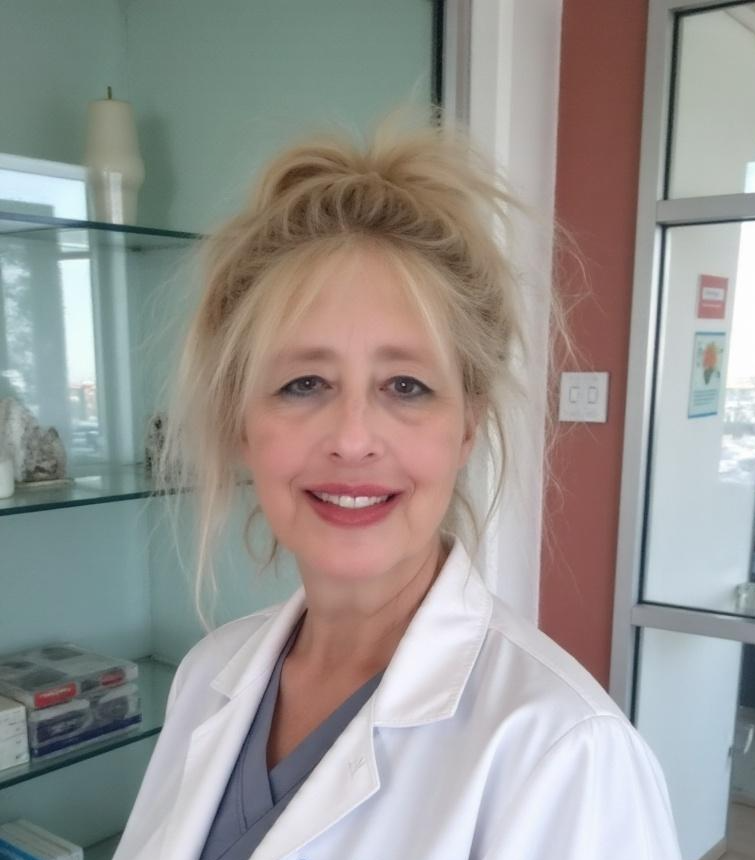
Nancy L. Kimmel obtained her PhD in Environmental Engineering in 2002, then went on to teach Physics and Mechanical Engineering at Lawrence Technological University, Henry Ford College and Oakland University. She obtained her Associate in Nursing from Henry Ford College and then went on to earn her Master Degree as a Family Nurse Practitioner and became Board Certified working as a licensed FNP in the State of Michigan. She then went on to Medical School where she is now in her 3rd year, and is also in the process of obtaining her Doctorate in Nursing Practice through Chamberlin University. She has authored the NET Study Guide, as well a several books on subjects of Math, ECG/EKG and Phlebotomy. She holds a patent on an Air Filter through the U.S. Patent Office.
313-826-2381