


Exciting News from PCT
It is our pleasure to announce some wonderful news here at Phlebotomy Career Training — soon to be officially launched into the world as PCT Institute of Health Care.
What is the exciting news, you ask? We are officially launching our Administrative Medical Assistant Certification Program — and we could not be more thrilled to bring this to our students.
The cost of this program is $710 — the same as our Clinical Medical Assistant program. And I think this is a great course, and one of the reasons I say that is because we have students who genuinely do not want the hands-on clinical component that comes with the CMA track.
They do not want to be assisting with procedures where fluids of interesting colors make an appearance. They do not want to give injections, collect urinary specimens, or handle stool samples. That is simply not what they are looking to do — and there is absolutely nothing wrong with that.
Rather, our Administrative Medical Assistants are the people who thrive in the front office. They are the ones who keep everything running. They are, quite frankly, the backbone of the physician’s office.
“The Administrative Medical Assistant is the backbone of the physician’s office — and don’t let anyone tell you otherwise.”
So what does an average day look like? Let’s walk through it.
You arrive at the office and immediately begin checking messages from the night before. You return calls. You review the patient roster for the day and confirm appointments. You check for incoming lab results and make sure the physician receives them. You handle any electronic prescriptions that need to be routed to the pharmacy. And that is just the first hour.
From there, the phones start ringing — and they do not stop. You manage the flow of incoming calls: appointment scheduling, prescription refill requests, referral coordination, and insurance questions. Simultaneously, you are monitoring the billing software, because many physicians rely on their Administrative MA to handle patient billing directly rather than employing a separate billing specialist.
Depending on the specialty of the physician you work for, your day will develop its own rhythm. A pulmonologist’s office will have you scheduling breathing tests. A cardiologist’s office may have you booking patients for EKGs, angioplasties, stent placements, or coronary artery bypass procedures. Over time, you will develop a fluency in the specific language, tests, and workflows of your specialty — and that expertise becomes genuinely valuable.
Throughout the day you are also managing incoming faxes, filing them into the correct patient records, and maintaining strict compliance with HIPAA privacy standards. Patient records must be secured, organized, and handled with the same level of care and respect that the patients themselves deserve.
Make no mistake — this is not a course you can walk through without doing your due diligence. There is a real knowledge base to build here, and it matters.
Administrative Medical Assistants need to be fluent in medical terminology. We are talking about abbreviations, prefixes, suffixes, and clinical shorthand — reading a patient chart should feel like reading your native language. Abbreviations like BP, PRN, QID, IM, and SubQ need to be second nature.
There is also a meaningful component of medical billing and coding in this program. While the Administrative MA is not a billing and coding specialist, a solid understanding of the basics is essential to passing the national exam and to performing the job competently. And frankly, if you are considering pairing the Administrative MA certification with a Medical Billing and Coding course — that is not a bad idea at all. That combination makes you exceptionally marketable.
Core Knowledge Areas Include
- Medical terminology, abbreviations, and clinical documentation
- Medical billing and coding fundamentals (ICD-10, CPT, HCPCS)
- Scheduling, appointment management, and patient intake protocols
- Electronic health records (EHR) and health information management
- HIPAA privacy and confidentiality requirements
- Prescription routing and pharmacy communication
- Insurance verification and patient billing software
Students will be manually enrolled in our new Learning Management System — Moodle — upon registration. This platform is comprehensive, intuitive, and packed with features designed to support the way adult learners actually learn. We are confident you will find it to be an excellent environment for your studies.
The Administrative Medical Assistant program is 1,200 clock hours, which includes 204 required clinical hours. For the clinical component, students are encouraged to reach out to their favorite physician’s office and inquire about volunteering at the front desk. This is your opportunity to apply everything you have learned in a real-world setting — and to start building the professional relationships that often lead to job offers.
As with all of our programs at PCT Institute of Health Care, the national certification exam for the Administrative Medical Assistant is included in the cost of your course. Students may choose to sit for their exam through one of three nationally recognized organizations:
National Healthcareer Association
American Medical Certification Association
National Center for Competency Testing
PCT Institute of Health Care will cover the cost of one exam attempt as a complimentary service to every enrolled student. If you look around at other online programs, you will find that very few schools actually pay for their students’ national exams. We do — because we are that confident in our curriculum, and because we know that having a nationally recognized certification in hand will dramatically improve your employment opportunities.
“We pay for your national exam because we are confident you will pass it — and because your certification matters to us as much as it matters to you.”
The Administrative Medical Assistant program is a natural fit for students who want a meaningful, stable, and rewarding career in healthcare — without the clinical procedures. It is front-office excellence. It is the kind of work that keeps a practice running smoothly, keeps patients informed and cared for, and keeps physicians able to do what they do best.
If this sounds like the career you have been looking for, we are ready to help you build it.
The Front Line of Patient Care: Why Administrative Medical Assistants Are Reshaping Modern Healthcare
Walk into almost any clinic, doctor’s office, or outpatient center in the country and the first person you’ll interact with is probably an administrative medical assistant. They’re the ones who check you in, verify your insurance, pull your records, and make sure the entire visit runs without a hitch. And yet, for all the weight they carry in keeping a healthcare practice functioning, the role is often overlooked when people think about careers in medicine.
That’s starting to change — fast.
The demand for skilled administrative medical assistants has surged over the last decade, driven by an aging population, expanding healthcare networks, and increasingly complex billing and coding systems. According to the U.S. Bureau of Labor Statistics, employment of medical assistants is projected to grow well above the national average for all occupations. These aren’t just jobs — they’re careers with longevity, variety, and real opportunity for advancement.
What Does an Administrative Medical Assistant Actually Do?
The title covers a wide range of responsibilities, and that’s honestly one of the most appealing things about the role. On any given day, an administrative medical assistant might be managing patient appointments and phone queues in the morning, processing insurance claims before lunch, and updating electronic health records in the afternoon — all while remaining the calm, professional presence patients need when they walk through the door.
Soft skills matter enormously here. This isn’t just a desk job. Administrative MAs are patient-facing, and the ability to communicate clearly, empathetically, and professionally can have a real impact on patient outcomes. A patient who feels heard and respected at intake is more likely to share accurate information. A front desk that runs efficiently means a clinic that sees more patients and bills correctly — both of which matter to the bottom line.
At the same time, the technical side of the job is substantial. Medical coding and billing alone requires fluency in ICD-10, CPT, and HCPCS coding systems, as well as a working understanding of claims submission and reimbursement processes. Errors in this area can cost practices thousands of dollars in claim denials. Getting it right is not just a nicety — it’s essential.
“The ability to communicate clearly, empathetically, and professionally can have a real impact on patient outcomes.”
A Training Program Built for the Real World
PCT Institute of Health Care’s Administrative Medical Assistant program is a 1,200-clock-hour curriculum designed to produce graduates who are genuinely work-ready. That means going beyond theory. Students cover the full scope of front-office operations, from appointment scheduling and telephone techniques to patient intake protocols and HIPAA compliance. Every module connects directly to what employers actually need.
Some highlights of what the training covers:
- Medical Office Procedures — 150 hours covering front desk operations, scheduling workflows, and administrative standards of protocol in clinical settings.
- Phone Techniques & Scheduling — Professional telephone procedures, patient callbacks, referral coordination, and insurance verification.
- Medical Coding & Billing — Comprehensive instruction in ICD-10, CPT, and HCPCS systems, claims submission processes, and reimbursement cycles.
- Patient Records & EHR — Electronic health record management, record retention policies, and release of information protocols.
- HIPAA & Confidentiality — 100 combined hours covering privacy rules, security requirements, breach notification, patient rights, and the proper handling of sensitive information.
- Vital Signs & Medical Terminology — Clinical foundations including blood pressure, pulse, and respiration collection, plus the medical language every healthcare professional needs.
- Therapeutic Communication — Techniques for active listening, empathy-driven interaction, and culturally sensitive patient engagement.
The program also includes 204 hours of supervised clinical externship, where students apply everything they’ve learned in a real-world medical setting — building the kind of hands-on confidence that only comes from doing the work.
Flexibility That Fits Your Life
One of the biggest barriers to career training is time — or the perceived lack of it. PCT Institute built this program with working adults, parents, and career-changers in mind. The curriculum is fully self-paced, accessible 24/7 through an online student portal, and designed to be completed on your schedule. Most students can work through the coursework over several months, but you’ll have up to six months from enrollment to complete your program.
And because earning your certification means nothing without being able to prove it, the national exam is included in your tuition. PCT Institute covers the cost of your nationally accredited certification exam — as long as you complete the program within your enrollment period. That’s one less financial hurdle standing between you and your new career.
Who Should Consider This Career Path?
The honest answer? A lot of people. Administrative medical assisting is a strong fit for anyone who is organized, people-oriented, and comfortable in a fast-paced environment. It’s an excellent entry point into healthcare for those without a clinical background, and it’s also a meaningful upgrade for professionals already working in medical settings who want to formalize and expand their skill set.
It’s also a smart stepping stone. Many administrative MAs use the role as a launchpad into healthcare management, medical billing specialties, nursing school, or other advanced programs. The foundational knowledge you build here — anatomy basics, medical terminology, HIPAA, patient communication — translates across dozens of healthcare career paths.
The Bottom Line
Healthcare is one of the most stable industries in the economy. And administrative medical assistants are at the operational center of it. If you’re looking for a career that puts you in the middle of the action without requiring years of school, that pays competitively, and that offers genuine room to grow — this might be exactly what you’ve been looking for.
PCT Institute of Health Care’s new Administrative Medical Assistant program launches soon at PCTinstituteofhealthcare.org. Enrollment opens shortly — and seats will fill. If you’re ready to take the first step, this is the place to start.
What You’ll Actually Learn in an Administrative Medical Assistant Program — And Why Employers Care
There’s a version of this conversation that goes: you sign up for a course, you check some boxes, you get a piece of paper. Then reality hits when you’re on the job and realize the training left a lot out.
That’s not what a well-designed Administrative Medical Assistant program looks like. Done right, this kind of training covers everything from the mechanics of insurance billing to the nuances of communicating with a patient who’s frightened or in pain. It’s a program that prepares you for the job as it actually exists — not as a simplified version of it.
PCT Institute of Health Care’s new AMA program is built on that philosophy. Here’s a closer look at what students actually learn, module by module, and why it matters in the real world.
Starting With Operations: The Machine That Keeps Clinics Running
The backbone of any medical office is its systems. Who answers the phone, how they answer it, how appointments get scheduled, how patients move through the intake process — all of this has to work cleanly or the whole operation gets backed up. The first major block of the AMA curriculum tackles exactly this, with 150 hours of Medical Office Procedures and another 100 hours dedicated specifically to Phone Techniques and Scheduling.
It might sound like entry-level stuff. It isn’t. Professional phone protocols in a medical setting involve a specific kind of finesse. You’re often managing distressed callers, complex insurance questions, and appointment logistics simultaneously — all while maintaining a tone that keeps patients comfortable and providers happy. The same goes for scheduling. Effective appointment management in a busy practice is part logistics puzzle, part patient care strategy.
Patient Intake: More Than Signing People In
The intake process is where patient care actually begins. And it’s far more involved than handing someone a clipboard. A trained administrative MA understands how to collect and verify demographic information, insurance data, and chief complaint documentation in a way that’s accurate, efficient, and — crucially — compliant with privacy law.
This 100-hour block of the curriculum lays a foundation that every clinical interaction depends on. If the intake is incomplete or inaccurate, it ripples through the entire encounter: billing issues, miscommunications with providers, claim denials, and delays in care. Learning to do it right the first time isn’t optional. It’s the job.
Medical Coding and Billing: The Engine of Healthcare Revenue
Ask any practice manager what keeps them up at night and there’s a good chance medical billing will come up early in the conversation. The systems governing how healthcare services get coded and reimbursed are complex, constantly updated, and utterly unforgiving of error. A misplaced code or an incorrect modifier can mean a denied claim, a delayed payment, or — worse — a compliance problem.
The AMA program dedicates 150 hours to Medical Coding and Billing, covering ICD-10 diagnostic codes, CPT procedural codes, and HCPCS (the Healthcare Common Procedure Coding System used primarily for Medicare and Medicaid billing). Students learn not just the codes but the logic behind them — how to select the right code for a given service, how to submit clean claims, and how reimbursement flows through the system.
This is genuinely marketable expertise. Facilities that employ administrative MAs who can handle billing competently often see meaningful reductions in claim denial rates. It’s the kind of skill that justifies a higher wage and opens doors to billing specialist roles down the line.
“A misplaced code can mean a denied claim, delayed payment, or a compliance problem. Students learn not just the codes but the logic behind them.”
HIPAA and Confidentiality: Not Optional, Not Negotiable
Privacy regulations in healthcare exist for good reason — and violating them carries serious consequences for both patients and providers. The HIPAA section of the AMA curriculum clocks in at 50 hours, with another 50 dedicated to broader Confidentiality training. Together, these modules cover the Privacy Rule, the Security Rule, breach notification requirements, patient rights, consent forms, and the specific, practical ways that sensitive information must be handled in a clinical setting.
This is material that every administrative MA will apply every single day. And it’s the kind of knowledge that employers genuinely test for during the hiring process. Being able to speak fluently about HIPAA compliance in an interview isn’t just impressive — it signals professional readiness.
Vital Signs and Medical Terminology: Bridging Admin and Clinical
One of the things that distinguishes a well-trained administrative MA from someone who just learned to answer phones and file paperwork is a foundational understanding of the clinical world they’re operating in. That’s why the AMA curriculum includes 100 hours of Vital Signs and Symptoms training, plus another 100 hours of Medical Terminology.
Taking blood pressure, measuring pulse and respiration, recording oxygen saturation, documenting height and weight — these aren’t skills reserved for clinical staff. Administrative MAs in smaller practices or urgent care settings often assist with these tasks. And even when they don’t, understanding what these measurements mean makes them far more effective in their administrative role.
Medical Terminology is similar. When you know that ‘tachycardia’ means a fast heart rate and ‘dyspnea’ means difficulty breathing, you become a more capable communicator, a better documenter, and a more confident member of the care team. The language of medicine is something every healthcare professional benefits from knowing.
Therapeutic Communication: The Human Side of Healthcare
Rounding out the curriculum is 46 hours of Therapeutic Communication — a module that teaches students how to engage patients with empathy, cultural sensitivity, and professional grace. Active listening. De-escalation. Meeting patients where they are emotionally and linguistically.
Healthcare is, at its core, a people business. The technical skills matter enormously. But so does the ability to make a nervous patient feel safe, to explain a billing statement without condescension, and to navigate difficult conversations with composure.
The Externship: Where It All Comes Together
All of the classroom and online instruction culminates in 204 hours of supervised clinical externship. Students work in a real healthcare setting — a doctor’s office, urgent care center, or similar facility — applying their training under professional supervision. This is where knowledge becomes skill and skill becomes confidence.
For those with prior experience, a waiver process exists. But for most students, the externship is the bridge between learning and doing. It’s what makes the difference between a graduate who has studied healthcare and one who has actually worked in it.
Ready to Get Started?
PCT Institute of Health Care’s Administrative Medical Assistant program is launching soon at PCTinstituteofhealthcare.org. The program is self-paced, nationally accredited, and includes the cost of your certification exam. If you’re ready to build a healthcare career that’s both stable and rewarding, there’s no better time to start than now.
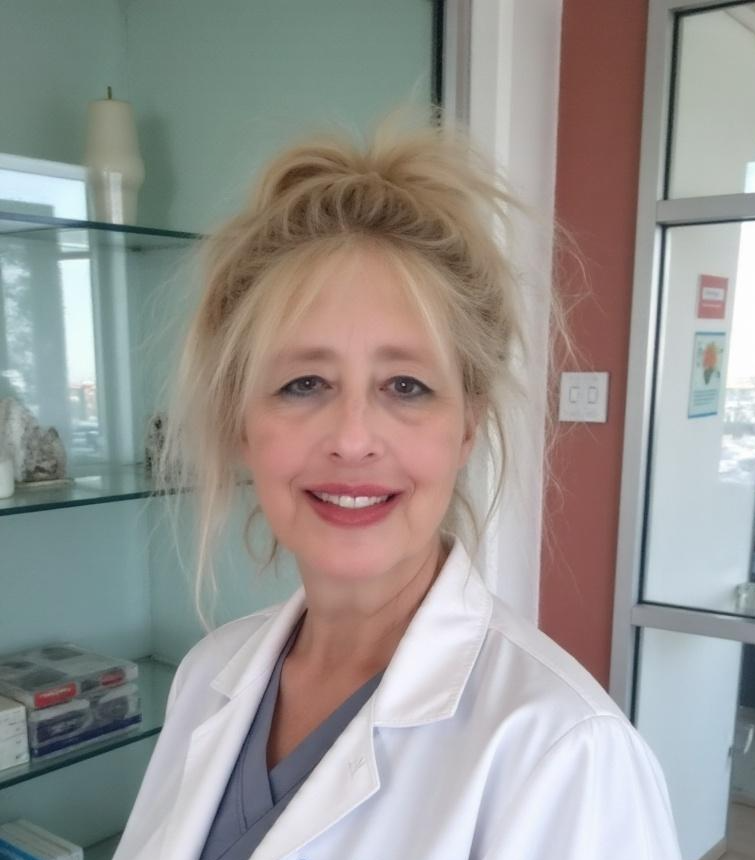
Nancy L. Kimmel obtained her PhD in Environmental Engineering in 2002, then went on to teach Physics and Mechanical Engineering at Lawrence Technological University, Henry Ford College and Oakland University. She obtained her Associate in Nursing from Henry Ford College and then went on to earn her Master Degree as a Family Nurse Practitioner and became Board Certified working as a licensed FNP in the State of Michigan. She then went on to Medical School where she is now in her 3rd year, and is also in the process of obtaining her Doctorate in Nursing Practice through Chamberlin University. She has authored the NET Study Guide, as well a several books on subjects of Math, ECG/EKG and Phlebotomy. She holds a patent on an Air Filter through the U.S. Patent Office.
313-826-2381