Shining a Light on a Rare and Misunderstood Disease
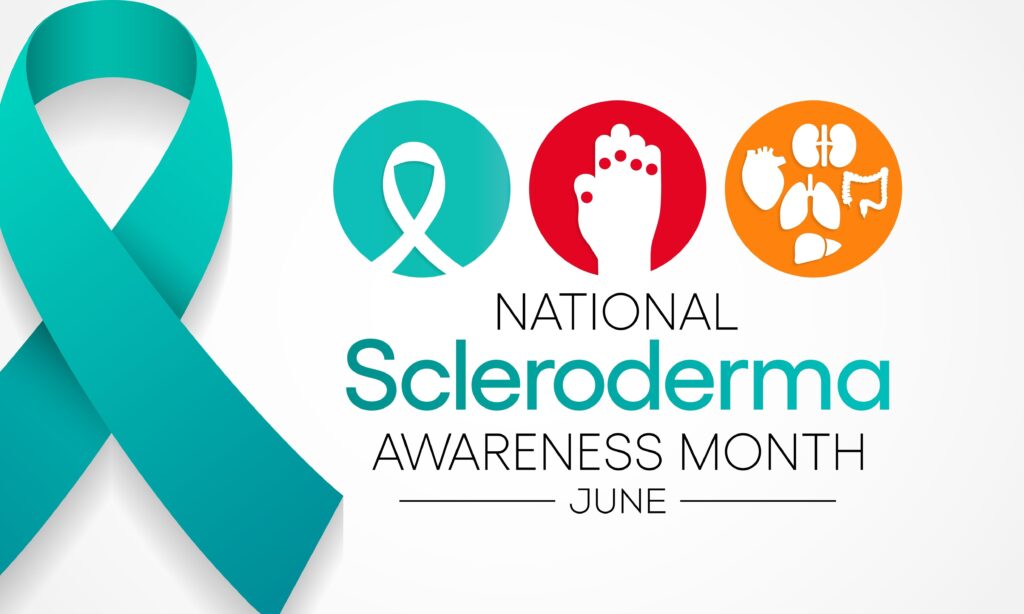
June marks National Scleroderma Awareness Month, a time to raise visibility and understanding about this chronic, autoimmune disease that impacts an estimated 300,000 Americans. Despite its rarity, scleroderma can be devastating, causing the body to attack itself by overproducing collagen which leads to a thickening and hardening of the skin and connective tissues.
The name “scleroderma” literally means “hard skin” in Greek, reflecting one of the most visible manifestations of the disease. However, the effects go far beyond just the skin. Scleroderma can damage virtually any part of the body, including vital organs like the lungs, heart, and kidneys. This indiscriminate nature makes scleroderma highly unpredictable and difficult to diagnose and treat.
“Scleroderma is a very serious condition that is often misunderstood,” says Dr. Janet Poole, a rheumatologist at the University of New Mexico. “Symptoms can vary greatly from patient to patient, which frequently leads to delayed diagnosis and an inability to get proper treatment quickly.”
Those disparate symptoms can include shortness of breath, fatigue, joint pain, digestive issues, and Raynaud’s phenomenon—a disruption of blood flow that causes fingers and toes to turn white or blue when exposed to temperature changes or stress. As the disease progresses, it can cause the skin to become thick, tight, and shiny, sometimes making it difficult to bend fingers or open the mouth fully.
Despite ongoing research, much about scleroderma remains a mystery. Its exact causes are unknown, though experts believe it results from a combination of genetic and environmental factors like exposure to certain solvents or viruses. Women are disproportionately affected, comprising up to 80% of cases. The disease can strike anyone at any age but is most commonly diagnosed between the ages of 25 and 55.
Perhaps most cruelly, there is no cure for scleroderma and no way to stop or reverse its progression. Available treatments aim to alleviate specific symptoms and prevent further damage to affected organs. An interdisciplinary team of specialists is often required, including rheumatologists, pulmonologists, nephrologists, dermatologists, and others depending on which parts of the body are impacted.
For scleroderma patients and their loved ones, coping with such an unpredictable, life-altering ailment is an immense physical, emotional, and financial challenge. That’s why raising awareness and providing support are so vital.
“Many people feel isolated and alone in dealing with this disease,” says Amanda Thorton, president of the Scleroderma Foundation’s Greater Philadelphia Tri-State Chapter. “Our organization strives to amplify patients’ voices, connect them with others facing similar struggles, and advocate for more research toward better treatments and hopefully one day a cure.”
The Scleroderma Foundation is the national leader for scleroderma research, support, education, and advocacy. It hosts support groups, educational events, fundraising campaigns, and an annual national patient conference. One of its major awareness efforts each year is the #Bares campaign which encourages people to “bare” creatively decorated arms to show solidarity with those impacted by hardening of the skin caused by scleroderma.
While scleroderma may be rare, the need for compassion and support is not. This June, take a moment to don your decorated arm, spread awareness on social media, or get involved with the Scleroderma Foundation. Your voice can make a powerful difference for the estimated 300,000 Americans bravely fighting this elusive and misunderstood foe.
-
Offers educational resources for patients, caregivers, and health professionals, as well as support groups and activities that can help with symptom management and self-advocacy
-
Has a section for patients with resources and information
-
A nonprofit that funds research, promotes awareness, and provides support and education for people with scleroderma and their loved ones
-
Offers resources such as progress charts, body maps, appointment planners, and a guide for caregivers and loved ones
-
Provides information on scleroderma diagnosis and treatment, including therapies, pain relievers, and surgical procedures
Scleroderma Foundation 300 Rosewood Drive, Suite 105 Danvers, MA 01923 www.scleroderma.org/site/PageServer?pagename=awareness_month
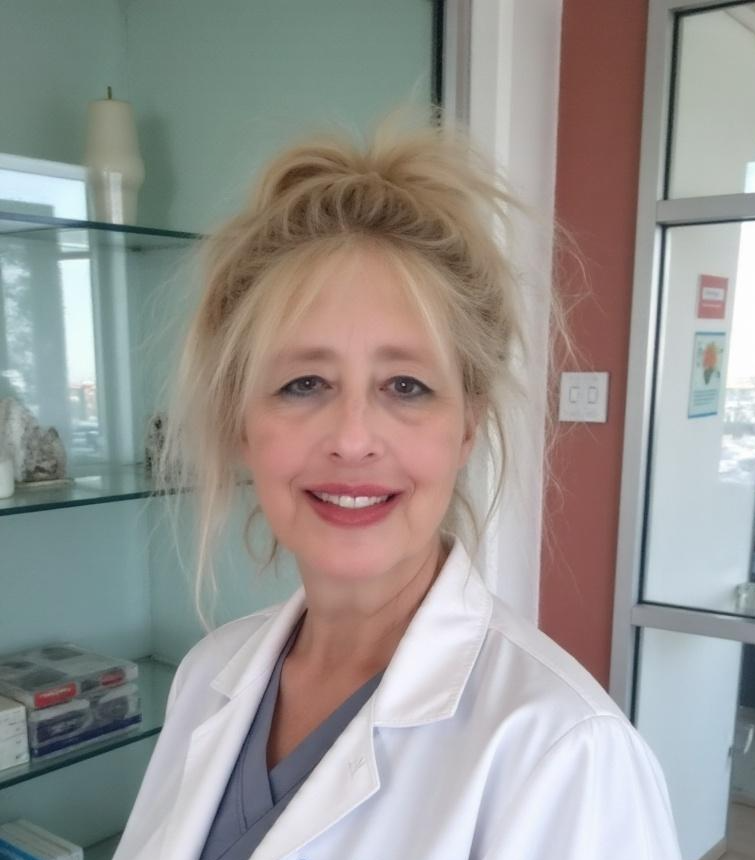
Nancy L. Kimmel obtained her PhD in Environmental Engineering in 2002, then went on to teach Physics and Mechanical Engineering at Lawrence Technological University, Henry Ford College and Oakland University. She obtained her Associate in Nursing from Henry Ford College and then went on to earn her Master Degree as a Family Nurse Practitioner and became Board Certified working as a licensed FNP in the State of Michigan. She then went on to Medical School where she is now in her 3rd year, and is also in the process of obtaining her Doctorate in Nursing Practice through Chamberlin University. She has authored the NET Study Guide, as well a several books on subjects of Math, ECG/EKG and Phlebotomy. She holds a patent on an Air Filter through the U.S. Patent Office.
313-826-2381