
You have finished your classroom hours, you have successfully completed your clinical blood draws, and now only one thing stands between you and your new career: the national certification exam.
For many students, this is the most stressful part of the process. Test anxiety is real, especially when your career depends on the outcome. But the truth is, the phlebotomy certification exam is entirely manageable if you know exactly what to expect.
While different agencies (like the NHA, ASCP, and AMCA) have their own specific tests, they all cover the same core medical concepts. Here is a detailed breakdown of what is actually on the phlebotomy certification exam and how you can prepare to pass it on your first try.
The Format of the Exam
Most national phlebotomy exams follow a similar format:
- Question Type: Multiple-choice questions.
- Length: Usually between 100 and 120 questions.
- Time Limit: Typically 2 hours.
- Delivery: Administered on a computer at a secure testing center or via secure online proctoring.
You will not be asked to draw blood during the written exam—your clinical competency was already verified by your instructor during your training program.
The 5 Core Subject Areas
The exam is designed to test your knowledge across the entire spectrum of a phlebotomist’s daily duties. Here are the five main categories you will be tested on:
1. Safety and Infection Control (Approx. 20% of the exam)
This is arguably the most important section because it deals with keeping both you and the patient safe from bloodborne pathogens. Expect questions on:
- Proper handwashing techniques
- Using Personal Protective Equipment (PPE) like gloves and masks
- OSHA regulations and standard precautions
- How to handle accidental needle sticks and biohazard spills
- Proper disposal of sharps
2. Anatomy and Physiology (Approx. 20% of the exam)
You cannot draw blood safely if you do not know where the veins are. You will need a solid understanding of the human body, specifically:
- The cardiovascular system (heart, veins, arteries, capillaries)
- The names and locations of the major veins in the arm (median cubital, cephalic, basilic)
- Basic knowledge of other body systems (nervous, respiratory, lymphatic) to understand how they interact with blood
- The composition of blood (plasma, red blood cells, white blood cells, platelets)
3. Venipuncture and Capillary Puncture Procedures (Approx. 40% of the exam)
This is the largest section of the test because it covers the actual physical act of drawing blood. You must know the step-by-step process flawlessly:
- Patient identification and preparation
- Selecting the correct venipuncture site
- Proper tourniquet application (and knowing how long to leave it on)
- The correct angle of needle insertion
- The Order of Draw: This is critical. You must memorize the exact color-coded order in which tubes must be filled to prevent cross-contamination of additives.
- Handling complications like hematomas, fainting (syncope), or missing the vein
4. Specimen Handling and Processing (Approx. 15% of the exam)
Drawing the blood is only half the job; you also have to ensure it reaches the lab in perfect condition. Expect questions on:
- Which tubes need to be inverted (mixed) and how many times
- Temperature requirements (which specimens need to be kept on ice or kept warm)
- Light sensitivity (which specimens need to be wrapped in foil)
- Centrifuging protocols
5. Quality Assurance and Legal Issues (Approx. 5% of the exam)
Phlebotomists must operate within strict legal and ethical boundaries. You will be tested on:
- HIPAA regulations and patient privacy
- Informed consent vs. implied consent
- Patient rights
- Proper documentation and labeling
How to Study Effectively
The key to passing is not cramming the night before; it is consistent, targeted studying. Here is how to prepare:
- Memorize the Order of Draw: If you only memorize one thing, make it the order of draw and the additives in each tube. This will account for a significant portion of your test.
- Take Practice Tests: Most credentialing agencies offer official practice tests. Take them. They will familiarize you with the wording of the questions and highlight the areas where you need to study more.
- Use a Study Guide: A good study guide condenses your textbook down to the essentials. If you need a comprehensive resource, check out our highly-rated Phlebotomy Study Guide.
The Best Preparation is a Great Education
The easiest way to pass the certification exam is to attend a training program that actually teaches the material you will be tested on.
At Phlebotomy Career Training, our curriculum is specifically aligned with the national standards set by the major credentialing agencies. We do not just teach you how to draw blood; we prepare you to pass your exam with confidence so you can start earning a competitive phlebotomist salary immediately.
Enroll in our Online Phlebotomy Certification Program today and get the education you need to succeed.
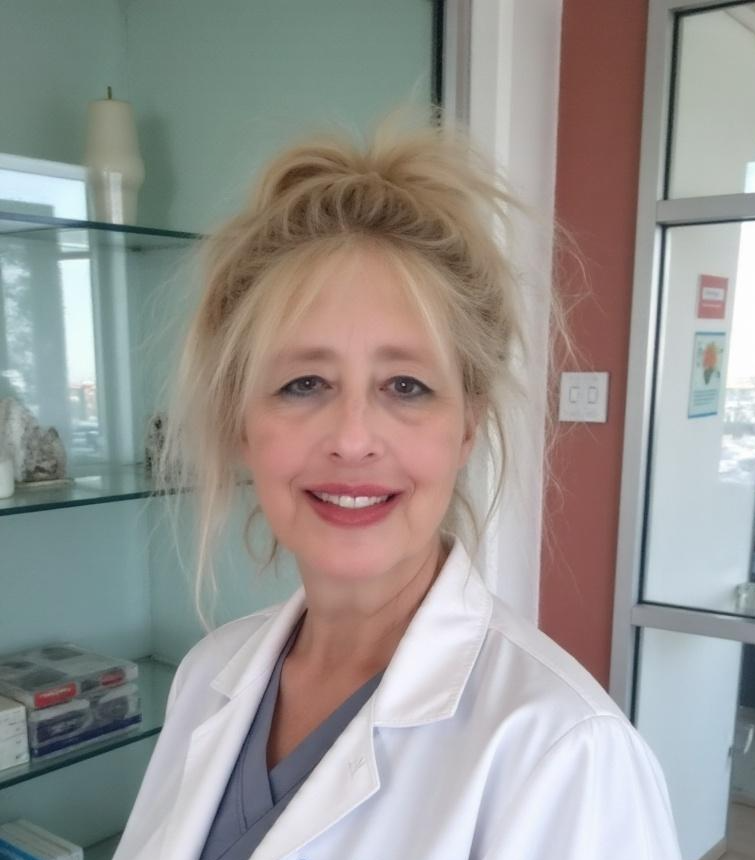
Nancy L. Kimmel obtained her PhD in Environmental Engineering in 2002, then went on to teach Physics and Mechanical Engineering at Lawrence Technological University, Henry Ford College and Oakland University. She obtained her Associate in Nursing from Henry Ford College and then went on to earn her Master Degree as a Family Nurse Practitioner and became Board Certified working as a licensed FNP in the State of Michigan. She then went on to Medical School where she is now in her 3rd year, and is also in the process of obtaining her Doctorate in Nursing Practice through Chamberlin University. She has authored the NET Study Guide, as well a several books on subjects of Math, ECG/EKG and Phlebotomy. She holds a patent on an Air Filter through the U.S. Patent Office.
313-826-2381