


It is a common misconception of many that if they want to enter healthcare, they will have to choose between the two extremes: either working hands-on with patients or doing office work behind the scenes. However, shortly after, time and experience teach one that clinics and medical offices mainly require professionals who are able to move comfortably between both. Such professionals are clinical medical assistants first of all, and that is the main focus of clinical medical assistant training.
In fact, a clinical medical assistant is the one who is directly involved with patients and is also a part of the team running the office smoothly on a day-to-day basis. Sometimes, it is the situation when you have to get the patient ready for the doctor’s examination, and at other times, you may be engaged in paperwork or arranging the flow of information among the members of the caregiving team. All this is one single job with a good mixture of qualities; it is challenging, interesting, and at the same time, stable.
The following article charts the course of a clinical medical assistant training program, i.e. what patient care and administrative skills are supposed to complement each other, and most importantly, why such a preparation should be taken seriously in real healthcare settings. If a person is eager to have a job that is not monotonous and has identified some of the bigger benefits of a clinical medical assistant role, then hearing about this training program will definitely be the right starting point.
What Clinical Medical Assistant Training Is Designed to Do
Clinical medical assistant training has a simple goal: to train students to effectively assist both patients and healthcare offices. Training is geared towards equipping students with the skills that the clinics depend on every day.
Students gain knowledge on how tasks involving patients relate to the tasks of administration. When information is transferred efficiently from the consultation room to the reception, patient care thus becomes faster. Clinical medical assistant training brings the focus on this aspect of care at the very beginning so that the students can have a clear understanding of their role in the entire process.
A clinical medical assistant is typically in a doctor’s office, an outpatient clinic, or a speciality practice. Such places require a staff member who can handle a change of tasks without losing focus. Training is one of the ways to help students develop the skill of being flexible. Having learned both sides of therapy, confusion is lessened, and students can go to busy places feeling that they are ready and not overwhelmed.
Patient Care Skills Taught in Clinical Medical Assistant Training
One of the main topics that clinical medical assistant programs focus on is patient care. Students are trained to develop the skills that ensure comfort, accuracy, and safety when attending to the patients in the course of their routine visits.
Common patient care skills are, for example, measuring the vital signs of the patients, getting the patients ready for the examination, and helping with the basic procedures as per the doctor’s instructions. Training of clinical medical assistants lays great emphasis on calm interaction and professionalism in the performance of different tasks. Patients can tell when the care they receive is well-organized and respectful.
The training also highlights the significance of routines. Performing tasks in a consistent way results in fewer errors and helps patients to relax. Students of clinical medical assistant programs are taught how to explain to the patients what is going on, how to listen to the patients’ concerns, and how to respond in a calm manner without hurrying. These skills not only build trust but also help clinics to maintain a smooth flow of appointments throughout the day.
Administrative Skills Covered in Clinical Medical Assistant Training
Administrative accuracy is a major factor in patient care, and that is why clinical medical assistant training embodies that truth. Students learn front office skills parallel to clinical tasks.
Training usually involves scheduling fundamentals, managing patient records, and discovering the flow of communication in a medical office. Clinical medical assistant students find out the importance of correct documentation and how slight errors may cause delays or confusion.
Administrative skills are like a bridge to patients, providers, and care plans. If the information is input correctly and shared promptly, doctors will be able to concentrate on the treatments. Clinical medical assistant training reveals how the office duties are instrumental in ensuring safe, orderly care. Acquiring these skills at the same time enables students to realize that every task in the line of work has a role in patient outcomes.
Why Clinical Medical Assistant Training Focuses on Both Sides of Care
Healthcare settings unfold at a fast pace, and miscommunication can be a cause of everything slowing down. A clinical medical assistant training program encompasses an emphasis on patient care and also on administrative tasks since clinics rely on their staff to be knowledgeable in both areas.
If anyone has an idea of what takes place in the exam room and also understands how the information is communicated later, then fewer details get lost. Clinical medical assistant training enables students to realize that their behaviors have an impact not only on their coworkers but also on the patients.
This combination of elements also generates a sense of responsibility. The students are trained to follow orders, verify details, and keep everything in order. Such an equilibrium paves the way for collaboration and at the same time lessens the pressure on the personnel during the hectic times of their shifts.
Training does not involve multitasking for the sake of speed. It is a mode of instruction that helps to coordinate so that the care delivered is correct.
Clinical Medical Assistant Training and Hands-On Skill Practice
Skills are most memorable when they are practiced. Local clinical medical assistant (CMA) courses include practical sessions where students can directly apply the knowledge they have gained. During practice sessions, students have the opportunity to repeat the task, get feedback on the mistakes, and thus improve the technique, step by step.
Precision should be your chief concern. The clinical medical assistant training program is very much geared towards step-wise learning. It is rightly believed that being accurate is more important than being fast in the beginning. The teachers assist students through the process of corrections so that habits become ingrained the right way.
Mistakes made while training are completely normal. Practice gives the feeling of doing something without stress and being able to learn. Registered clinical medical assistant students build up their confidence by doing the work over and over again in a setting where everything is under control. Once the training period is over, performing the required procedures is more like a habit and less like a challenge.
Communication Skills Built Through Clinical Medical Assistant Training
Effective communication is essential to all aspects of a healthcare environment. Training in clinical medical assisting equips students with the skills necessary for polite, clear communication with both patients and staff.
Students rehearse various scenarios such as outlining a procedure, providing accurate information, and being professional even on a hectic day. Since clinical medical assistant jobs sometimes entail conveying information between patients and doctors, it is very important that the message is clear.
In the course of their practice, students learn how to:
- Translate technical words into simple language when explaining a procedure
- Pay close attention to patient questions
- Properly document and communicate the information
- Stay calm when feeling under pressure
These communication skills save the clinic from miscommunications and make for a pleasant working environment among the staff members.
How Clinical Medical Assistant Training Prepares You for Daily Clinic Flow
A typical clinic day involves juggling patient care alongside paperwork, schedules, and communication. Clinical medical assistant training essentially follows this reality by teaching day-to-day routines that reflect actual workdays.
Students are taught how to keep track of everything while multitasking. Clinical medical assistant training focuses on learning how to prioritize duties and adhere to workflows. Being aware of the sequence of the tasks to be done will help mitigate stress when the pace of work suddenly increases.
Training also deepens students’ insight into how their role contributes to the whole team. When tasks are done correctly and in a timely manner, the patient’s care remains consistent. Being prepared enables newly hired medical assistants to get used to the work environment more quickly.
Career Options After Clinical Medical Assistant Training
Completion of a clinical medical assistant training program will unlock several opportunities for graduates to work in healthcare facilities such as primary care offices, speciality clinics, outpatient centers, or other medical practices.
Acquiring these skills also helps one to be adaptable in different healthcare settings. A clinical medical assistant training lays down the basic knowledge upon which one can develop further over time. Although the rate of progression depends on one’s work experience and aspirations, the training provides a robust platform that does not hinder one’s career options in the future.
Take Action: Use Clinical Medical Assistant Training to Build a Versatile Healthcare Career
Training for clinical medical assistant positions equips students with the skills needed to juggle various tasks, maintain organization, and interact with patients. It is a great support for those who want a healthcare job with variety rather than monotony.
If that option sounds good to you, lay out a clear plan from the start:
- Choose the type of healthcare environment you would most like to work in
- Look over the program layout and areas of emphasis
- Find time in your weekly schedule for study in a way you feel is achievable
- Reach out to a training provider with any detailed questions you have
- Getting ready sets off a chain of positive reactions.
By making clinical medical assistant training the main focus of your daily efforts and not losing sight of your objective, you will be able to develop a healthcare career of your own that features both patient care and office skills.
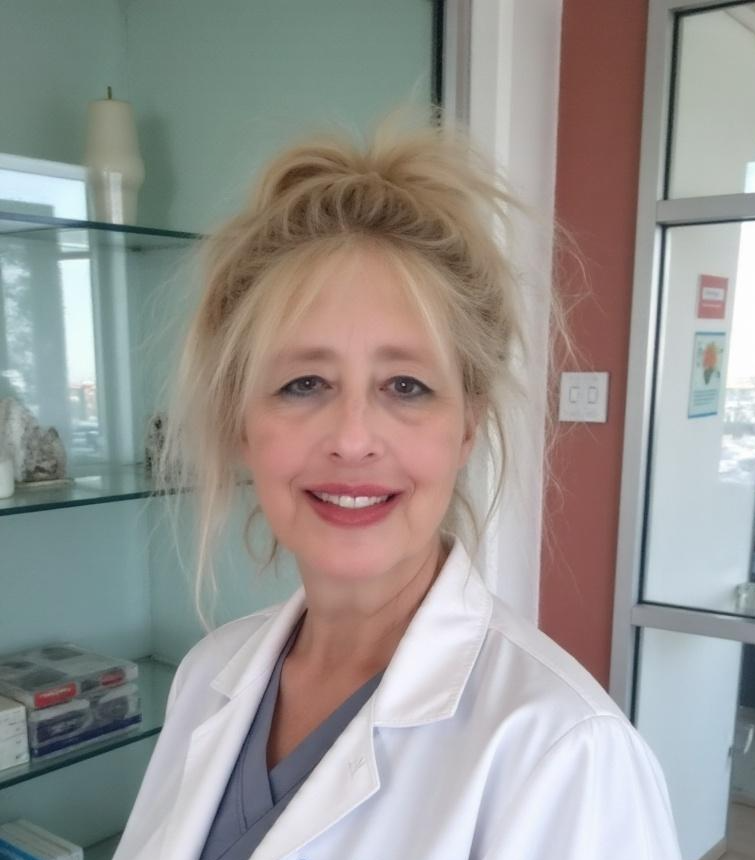
Nancy L. Kimmel obtained her PhD in Environmental Engineering in 2002, then went on to teach Physics and Mechanical Engineering at Lawrence Technological University, Henry Ford College and Oakland University. She obtained her Associate in Nursing from Henry Ford College and then went on to earn her Master Degree as a Family Nurse Practitioner and became Board Certified working as a licensed FNP in the State of Michigan. She then went on to Medical School where she is now in her 3rd year, and is also in the process of obtaining her Doctorate in Nursing Practice through Chamberlin University. She has authored the NET Study Guide, as well a several books on subjects of Math, ECG/EKG and Phlebotomy. She holds a patent on an Air Filter through the U.S. Patent Office.
313-826-2381