
The job of a medical assistant is to provide patient care and undertake administrative tasks in clinics and doctors’ offices. If you are planning a career that does not need you to attend medical school, here’s how to become a medical assistant.
A medical assistant helps healthcare professionals (like physicians) provide patient care and ensure seamless operation of medical facilities. For those wondering how to become a certified medical assistant, this is your complete step-by-step guide. Medical assistants aid in smooth operation of medical facilities and direct patient care so that doctors, nurses, and healthcare professionals can do their jobs.
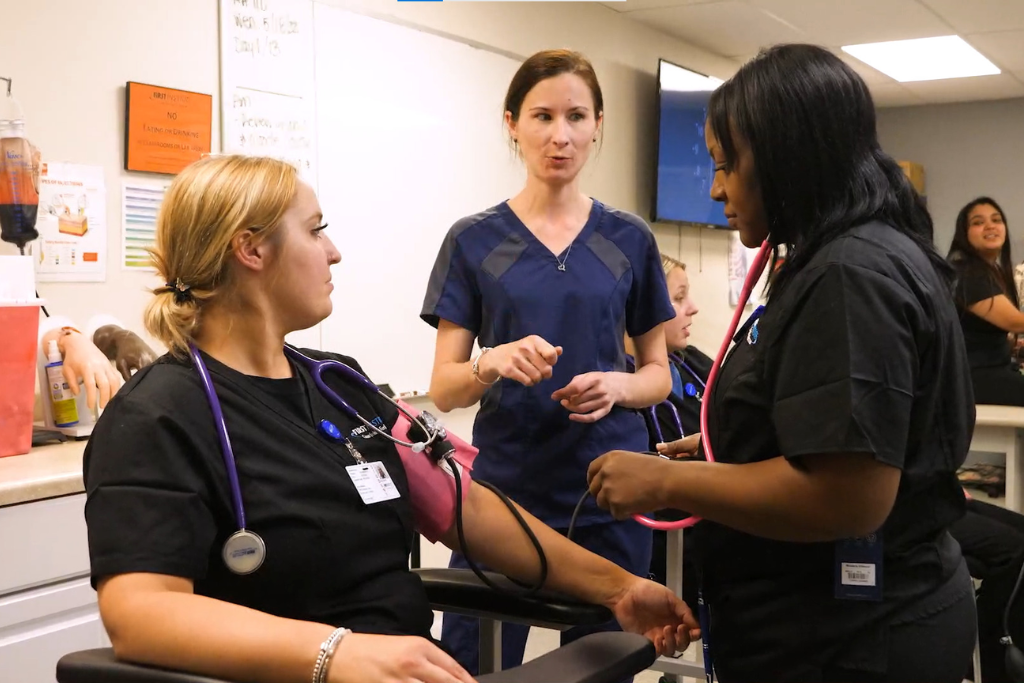
The job of a medical assistant roughly involves: greeting patients who come for appointments, helping nurses with their clinical duties, answering phone calls, emails, and messages from online portals, maintaining medical records, taking down a patient’s medical history, scheduling appointments, collecting and preparing lab specimens, cleaning and restocking examination rooms, and measuring patient vitals (like temperature, pulse, and blood pressure). Depending on the facility where you are employed, your tasks may focus on administrative or clinical work.
Steps to become a Medical Assistant
One of the first steps to become a medical assistant includes completing an accredited training program and getting professionally certified. If you go for specialized training, you can further expand your career options. While educational or certification requirements vary by state, most healthcare organizations prefer certified medical assistants. A certified medical assistant is not only credible, but is also perceived as skilled, knowledgeable, and committed to providing quality patient care.
High school diploma or equivalent: A General Educational Development (GED) or high school diploma is the minimum requirement. If you have had science or mathematics in your bio, it can be a strong base for future training and certification.
Earn a recognized medical program: Enrolling in an accredited medical assistant training program gives you the clinical and administrative skills required to function in a healthcare setting. The curriculum includes:
- Clinical/Medical knowledge: Basic physiology, anatomy, CPR, and cardiovascular certification.
- Diagnostic processes: How to perform electrocardiogram (ECG/EKG) and help with customary clinical processes.
- Admin responsibilities: Managing clinical records, handling billing, and coordinating patient visits.
- Coding and medical insurance: Understanding insurance plans/providers, medical diagnosis, and process codes.
- Office management: Core business operations, hiring methods, employee supervision, workplace decorum, and medical risk management.
A combination of classroom methods and on-the-job training prepares aspirants to handle both administrative and clinical responsibilities of a medical assistant.
Apply for a certification: Once you complete your education, pursue a professional certification. The National Commission for Certifying Agencies (NCCA) backs organizations which provide professional certification credentials. You can choose from certifications on the basis of your educational background, eligibility criteria, and career choice. One of the key steps to become a medical assistant is to decide whether to focus on clinical responsibilities or on administrative skills. The American Association of Medical Assistants (AAMA) is a popular choice. Before choosing the certifying body, go through their eligibility criteria and decide which best aligns with your goals.
Pass the CMA test: The Certified Medical Assistant (CMA) examination includes 200 multiple choice questions over a 40-minute period. It tests your understanding of administrative responsibilities, clinical processes, and general medical assistance knowhow. To take the test, enrol in a review course, go through required study materials, and complete the practice tests. Consistency in preparation can improve your knowledge, exam confidence, and your chances of passing the test.
Read More: How Much Do Phlebotomy Technicians Make in Texas
Certificate vs. Diploma Programs
A certificate program is a fast-track route if you want to reach the workforce soon without compromising essential training. A diploma on the other hand typically covers a somewhat broader gamut of topics to make sure you have both the basic and clinical knowledge that is expected in the starting-level roles. Your choice between the two programs will depend on your long-term priorities and your readiness to dedicate time to study.
Associate Degree Pathways
One of the steps to become a medical assistant is going for an associate degree. This will give you the time to study the complexities involved in the healthcare management scenario and learn about advanced clinical processes in detail. This comprehensive route is often chosen by those for whom medical assistance is the stepping stone towards a more leadership- or administrative-focused career in due course. Often this extra time and effort pay off as you get a holistic view of the healthcare sector.
Online vs. In-person Formats
With the flexibility and convenience of online and physical programs for medical assistance, you can now choose between the two. Online programs are easier as they allow you to complete the theory work at home, whereas in-person training helps you evaluate the physical and social environment required to master clinical tools. Students often prefer a hybrid arrangement, thus making the most of self-study and supervised classroom practices at the same time.
Skills Required
Medical assistant requirements involve having the following skills:
Organizational skills: You need to update and maintain patient records and keep a tab of the tasks including interaction with patients. Organized patient information helps save physicians time and effort in their everyday practice. A Clinical medical assistant also needs to take care of inventory maintenance and keep medicines and equipment well stocked.
Communication skills: A medical assistant is the point of contact between physicians and patients. They deal with confidential information like patient medical history, treatment methods, prescriptions, and test results. Quick and transparent communication helps avoid mishaps in clinical and hospital settings where the stakes are high.
Listening skills: As a medical assistant, your job is to be an active listener, apart from being an excellent communicator. You might be present during multiple interactions between doctors and patients throughout the day. You must absorb the required information to carry out and schedule the tasks and respond patiently to questions from both patients and physicians.
Technical skills: A key medical assistant requirement is to have sound technical knowledge. Procedures in hospital management are usually computerized which means you have to be informed on the important tools, equipment, and software used in medical environments. You are expected to know important data management tasks to track confidential information, patient details, prescriptions, test results, and appointments.
Time management skills: You are expected to perform different kinds of tasks and duties on a daily basis, some of them often being time sensitive. Understand what tasks need to be prioritized. For example, patient tasks are more crucial than admin tasks. With good time management, you can also maintain a good work-life balance.
Medical Assistant Salary and Job Outlook
Medical assistants can benefit from a robust job outlook in 2026-27. The median salaries are similar to those in other healthcare support services. According to the US Bureau of Labor Statistics (BLS), the median annual salary for medical assistants is projected around $45690 to approximately $60000 for 2027. The earning potential depends on different factors including work setting, location, and years of experience.
The field for medical assistants is constantly growing with an increase in the aging population and a continuous need for medical services driving the need for such jobs. The BLS projects a 12% growth rate in the field in 2024-34, considerably outdoing the projected growth rate for all occupations. This indicates job openings of roughly 101200 within this period.
