
Phlebotomy is a profession with a lot of scope for growth. If you are wondering how to become a phlebotomist, this is your guide to your dream role. A certified phlebotomist makes a difference every day. A phlebotomist is also known as a mobile examiner or a lab liaison technician. They are critical team members operating from diagnostic labs, hospitals, and donor centers. With breakthroughs in diagnostic technology every day, now is an exciting time to get started in this field.
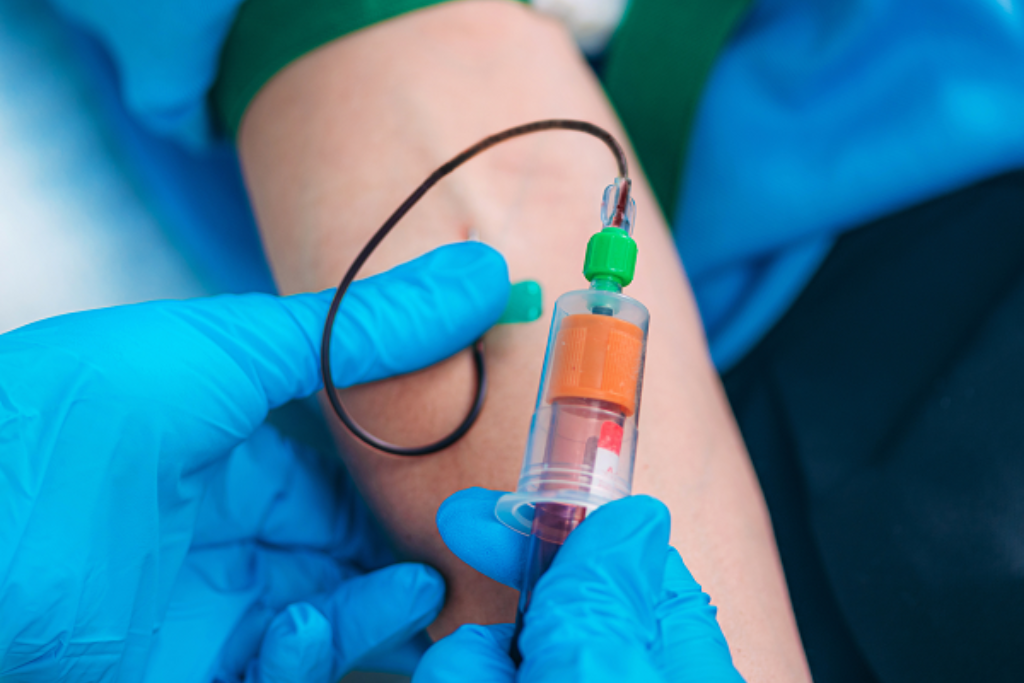
On a given day, a phlebotomist’s role involves drawing blood, getting samples ready for testing, and communicating with patients across various care settings. They work in fast-paced environments like clinics, hospitals, or laboratories. Work schedules involve holidays, evenings, or weekends depending on the work setting. Here are some of the responsibilities performed by phlebotomists:
- Drawing blood from blood donors or patients
- Understanding patients’ capacity to sit through the lab or clinical procedure, making them feel comfortable
- Explaining the blood withdrawal process to patients and answering their queries
- Performing basic point-of-care testing, like reading blood sugar levels
- Preparing specimens (blood, urine) for testing
- Maintaining medical care equipment like test tubes, needles, and blood vials
Requirements for Phlebotomists
A phlebotomist usually obtains certification from a postsecondary program. However, it is also possible to become one with a high school diploma or relevant training. For those thinking of how to get into phlebotomy, you are required to meet the following eligibility requirements:
- Get a high school diploma or high school/General Educational Development (GED) equivalency, or earn one through an 18-month program.
- Complete the phlebotomy tech training or educational program (usually of five years)
- Provide evidence of having successfully performed at least 30 venipunctures or 10 finger sticks or capillary sticks on live persons.
There is yet another way to go about. As you might be aware, there is schooling needed for obtaining certification. Get a diploma or high school/GED equivalent degree. Aside from this, you are required to have one year of supervised work experience as a phlebotomy technician in the last three years, or have two years of certified experience in the field in the last five years. You are required to present proof of immunization and CPR certification. Sometimes, a background check is also asked for. To fully understand the requirements, it is best to refer to your state licensing agency.
You can complete your phlebotomy tech program in a college, a vocational school, or a technical school usually within a year, or receive hands-on training of at least 40 hours apart from the coursework. A phlebotomist is taught subjects like physiology, anatomy, and laboratory work, among other things.
Once this is done, get certified. Some of the common certification agencies are the American Society for Clinical Pathology Board of Certification (ASCP BOC) and the National Accrediting Agency for Clinical Laboratory Sciences (NAACLS). Some other certifying bodies are the National Healthcareer Association (NHA) Certified Phlebotomy Technician (CPT), the American Medical Certification Association (AMCA), and the National Center for Competency Testing (NCCT). A key requirement for certification is clinical experience as well as examination qualification. Phlebotomists who transport samples may need other kinds of certifications and also a drivers’ license.
Also Read: How to Become a Medical Assistant
Types of Certifications
If you are planning to work in a state which does not require you to be a certified phlebotomist, it helps if you complete one to land your first job. This is an important step if you are asking questions like how to become a phlebotomist. Completing the certification process demonstrates your clinical and classroom experience along with the proof of having passed a test in your area of expertise. Any phlebotomy program offers three varieties of certification:
Limited phlebotomy technician (LPT): Authorization to carry out blood collection through skin puncture.
Certified phlebotomy technician I (CPT I): Authorization to undertake venipuncture and skin puncture blood collection.
Certified phlebotomy technician II (CPT II): Authorization to undertake venipuncture, skin puncture, and arterial puncture blood collection.
Skillsets Expected
Communication skills: A certified phlebotomist should be able to explain the clinical procedures with clarity and instruct patients.
People skills: They are needed to interact directly with patients, for whom a regular blood drawing procedure can trigger pain and anxiety. If the phlebotomist empathizes with and calms down the patient, the process becomes easier for the latter. Also, phlebotomists should work closely with medical staff.
Organizational skills: Once the blood sample is drawn, it needs to be labeled correctly and mapped to the correct database for accurate analysis.
Expertise and stamina: Withdrawing blood is a precise and hands-on method which requires expertise and experience. Phlebotomists are also required to stand for extended periods on any given workday for which physical stamina is a must.
In addition to these, you are required to have good mathematical skills, critical thinking abilities, good hand-eye coordination, and troubleshooting capabilities.
Read More: How Much Do Phlebotomy Technicians Make in Texas
What is a Traveling Phlebotomist?
If you are asking questions such as how to get into phlebotomy, the first answer to that is complete the required education and certification programs. Once done, you don’t have to worry about having to visit the same workplace, clinic, or hospital every day. This is where a traveling phlebotomist role comes in. A mobile phlebotomist or traveling phlebotomist is required to work in multiple sites. While the same eligibility and certifications are required, the one additional factor here is having a driver’s license and your own mode of transport.
Unlike a traveling nurse or doctor, a traveling phlebotomist usually works in the same geographical area usually for clients who might not have the need to hire a staff phlebotomist or draw blood samples for home care patients. They may even be required to work for mobile blood drives or as a member of a natural disaster response team. Some traveling phlebotomists might be enrolled for a single employer or hospital, whereas others might work for an agency.
Career Outlook
To grow in their careers, you may obtain certification in a specialized area as a donor phlebotomy technician or phlebotomy specialist. With further experience, you can become a medical assistant, registered nurse, or lab technician. A phlebotomist can earn from $19 to $21 an hour or $45230 per annum. If you opt for a coordinator or leadership role or have higher certifications, you may earn at the higher end of the pay scale.
By taking classes in nursing, you can explore a career as a nurse with an average salary of $88350 per annum. This role comes with more responsibility and hence financial stability. A medical assistant is vital to healthcare settings like physician’s offices, with an average annual salary of $43900. One of the important duties of a medical assistant is phlebotomy. An EKG technician, with specialization in cardiology, testing, recording readings, and assisting physicians with data, can make $43000 annually.
According to the US Bureau of Labor Statics, the wages of a phlebotomist may vary depending on their work location: outpatient care center (46670), state/local/government hospitals (44500). Mobile or traveling phlebotomists can make anywhere between $51000 and $60000 a year in addition to stipends. The job of a phlebotomy tech is in high demand with over 20000 positions to fill every year. The projection in this field remains high.
